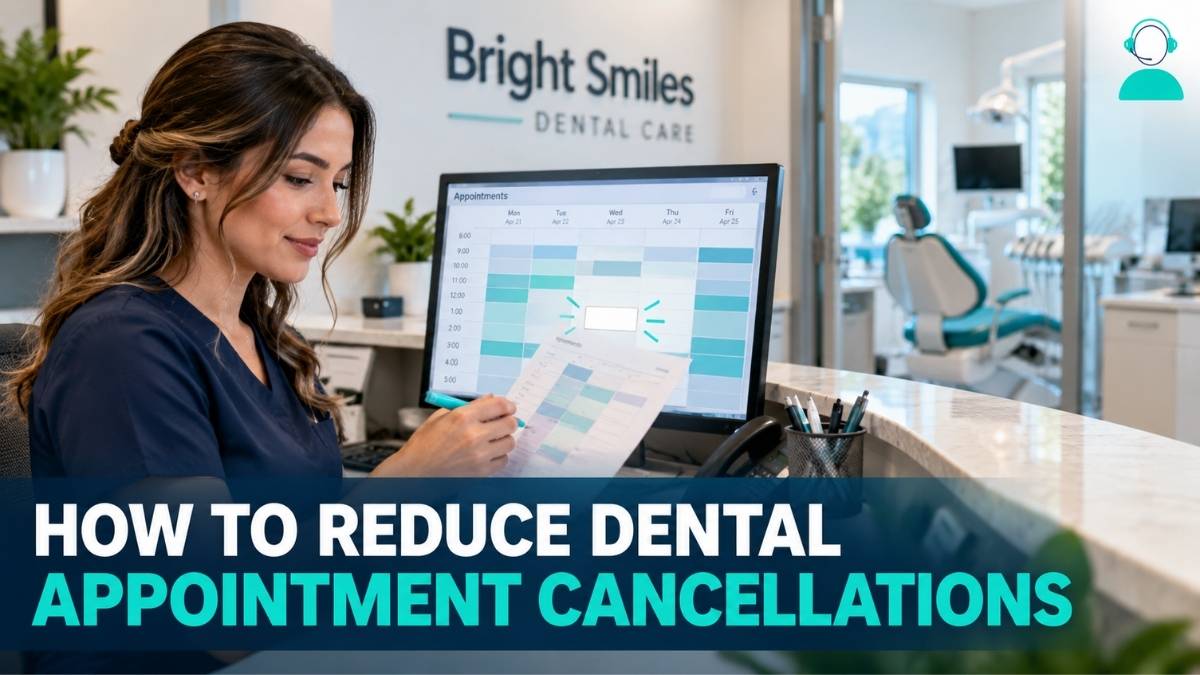
A single empty chair can cost a dental practice an hour of production that cannot be recovered.
Front desk teams often notice the gap only after a patient fails to arrive, leaving little time to refill it. Cancellations and no-shows behave differently, so each problem needs its own response.
This guide explains how to reduce dental appointment cancellations through confirmation workflows, written policies, and clear task ownership. It also covers what HIPAA and the Telephone Consumer Protection Act allow in patient reminders.
Each step names a responsible role so practice leaders can adapt the workflow to their own staffing and software.
Dental practices of any size can apply the steps, from single-chair offices to multi-location groups. The recommendations draw on dental association guidance, federal regulators, and published practice data.
Key Takeaways
- Cancellations and no-shows have different causes and need different fixes.
- Layered appointment confirmation catches unconfirmed visits before they become empty chairs.
- A written notice window works only when staff apply it consistently.
- Reminder content should stay minimal, and opt-out requests must be honored.
What Causes Dental Appointment Cancellations And No-Shows
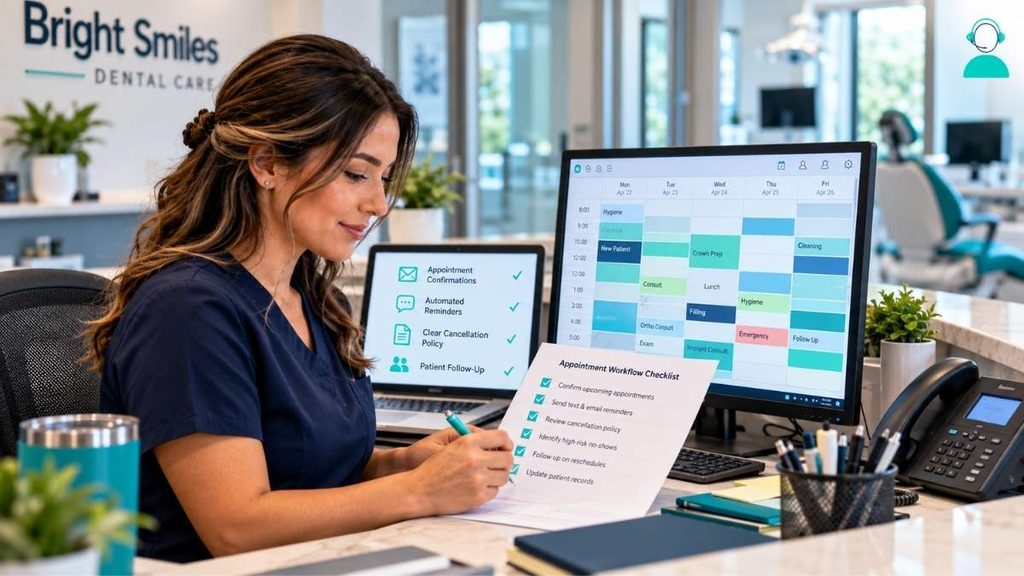
Patients cancel for different reasons than they miss visits without notice. Front desk teams can choose the right response and measure results accurately once the two problems are separated.
A cancellation means the patient notified the office. A no-show means the visit was missed without notice, as defined in a Finnish registry study of public dental services. Common drivers include forgetfulness, cost concerns, dental anxiety, and scheduling conflicts.
A dental network article citing Dental Intelligence data puts the typical dental no-show rate near 11% to 15%. A rate of 10% is considered good, while unconfirmed visits reached 33%. Hygiene visits were 9% and restorative visits 6%.
A study summary found winter had the highest cancellation rate and summer the highest no-show rate. Because the patterns invert, one response will not fit both problems.
| Measure | Cancellation | No-Show |
| Patient notice | Given | Not given |
| Best first response | Easy rescheduling and a short-notice list | Confirmation and follow-up calls |
| Main risk | Short window to refill the slot | Unused chair time with no recovery |
Each type needs a different first response from the front desk.
How To Reduce Dental Appointment Cancellations With A Front Desk Workflow
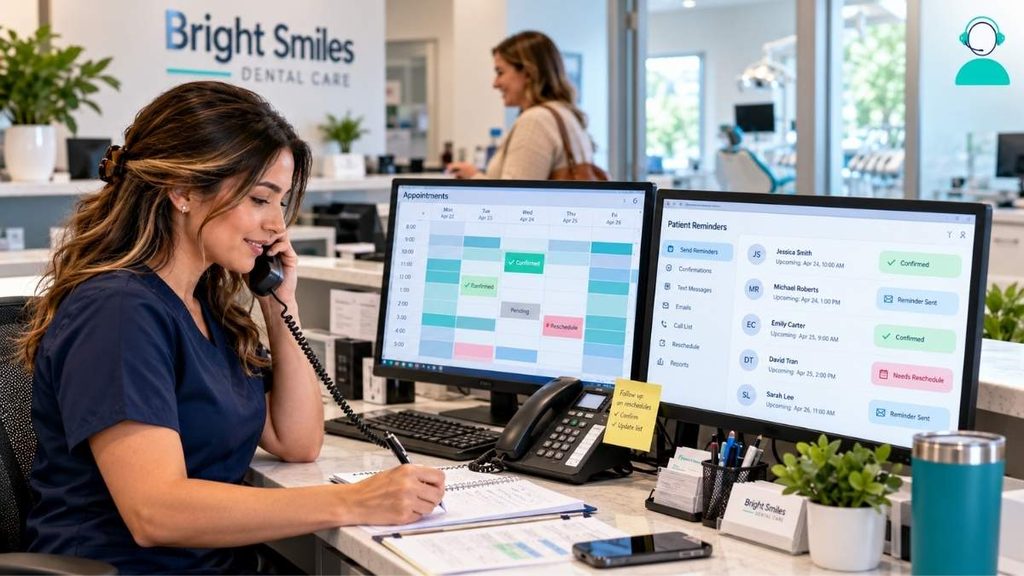
The workflow below moves from confirmation to recovery. Each step has a clear owner and a measurable output, which helps practices find where schedule gaps actually form.
Practices can reduce dental appointment cancellations by confirming each visit in layers and publishing a written notice policy. Easy rescheduling and a short-notice list help refill open slots. Monthly tracking of confirmation and cancellation rates shows which steps are working.
Build A Multi-Step Confirmation Sequence
Dental appointment reminders work best as a sequence rather than a single message. A common pattern includes a booking confirmation, an early reminder, and a closer request for a reply.
SMS reminders suit quick responses, while confirmation calls help with unconfirmed visits.
No universal cadence has been verified, so each office should test timing. A vendor-run analysis reported a 22.95% drop in dental no-shows after automated reminders were adopted. Because the software company sponsored it, the result is indicative rather than conclusive.
Set A Clear Dental No-Show Policy
A dental no-show policy defines the notice window, what counts as a late cancellation, and who approves exceptions. Public practice policies often use 24 or 48 hour windows, with fees that vary by office. A signed patient acknowledgment reduces later disputes about the terms.
The ADA advises using the same confirmation and rescheduling script every time. The same dental cancellation policy should apply to every patient. State rules and payer contracts can affect fees, so both need review.
Verify Insurance and Costs Before The Visit
Cost uncertainty can lead patients to postpone care. Dental insurance verification before the visit confirms coverage and allows the office to share a clear estimate.
Treatment plan acceptance often depends on whether patients understand what insurance pays and what remains.
A study summary reported higher cancellation and no-show rates among Medicaid and uninsured patients.
Those visits may justify a brief pre-visit conversation about payment options and timing. The front desk can document the conversation in the patient record.
Make Online Booking and Rescheduling Easy
Easy rescheduling can turn a cancellation into a moved visit. Online booking and a patient portal let patients change an appointment without a phone call. Patient scheduling software that adds a reschedule link to each reminder shortens that path.
Staff should also record a reason code for every cancellation. Those codes show whether cost, timing, or anxiety drives most cancellations. No verified effect size exists for online booking alone, so local tracking matters.
Keep A Short-Notice List To Refill Open Slots
Some cancellations will still happen, so recovery matters. A short-notice list holds patients who want earlier visits, ranked by urgency and appointment length. The front desk lead should call in a fixed order and document each offer.
Same-day gaps are hardest to refill, so the list needs current phone numbers and text consent. Offers should state the open time and provider clearly. A maintained list protects chair time and reduces schedule gaps without extra outreach.
Tighten The Dental Recall System and Treatment Plan Follow-Up
A dental recall system keeps hygiene visits on the calendar before patients drift away. Staff should rebook the next visit before the patient leaves the office. Unscheduled treatment plans deserve a follow-up call within a set number of days.
The Dental Intelligence data cited earlier shows a 9% rate for hygiene visits and 12% for new patients. A recall list should also record each patient’s preferred contact method. Consistent recall supports patient engagement workflows, patient retention, and patient loyalty.
Flag High-Risk Appointments and Patients
Missed visits tend to cluster in a small group. A Finnish registry study of children and adolescents found that 5% of patients accounted for 21.8% of no-shows. That population differs from adult private practice, so the pattern should be checked locally.
Dental practice management software can flag repeat late cancelers, new patients, and unconfirmed visits. Those visits can receive an extra confirmation call. This focuses front desk effort where misses concentrate.
Keeping Appointment Reminders HIPAA- And TCPA-Compliant
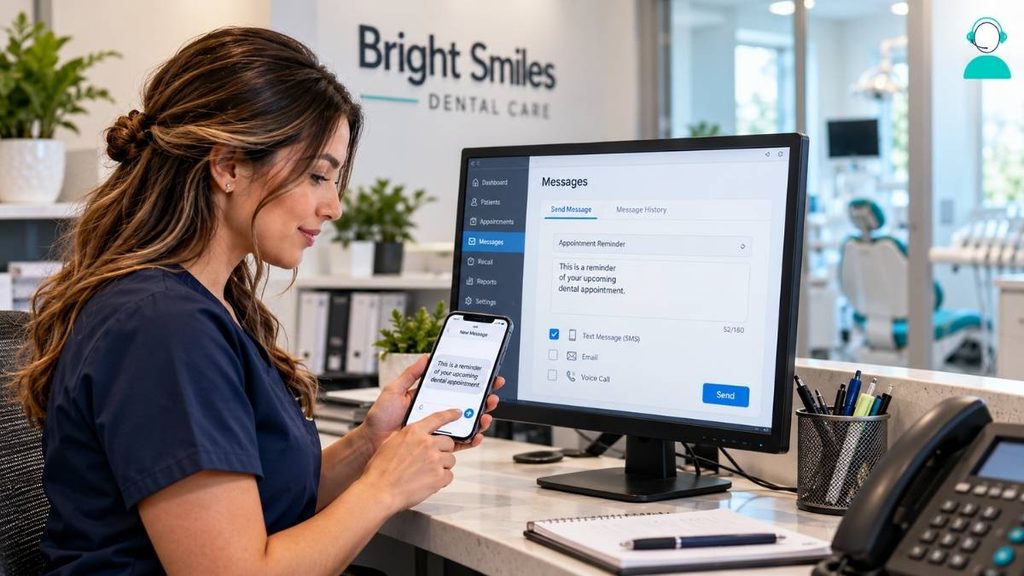
Reminders fall under two separate legal frameworks that practices often treat as one. HIPAA governs patient information privacy, while the TCPA governs automated calls and texts.
HHS states that appointment reminders are part of treatment and can be sent without patient authorization.
Messages should still carry minimal detail, such as the practice name, date, time, and callback number. Procedure names, balances, and diagnoses do not belong in a text or voicemail.
On September 30, 2026, the FCC adopted amended consent revocation rules for automated calls and texts. Callers may designate an exclusive opt-out method if each message discloses it.
Requests must be honored within ten business days, but one category’s revocation no longer ends every category.
| Compliance |
|---|
| A message can satisfy HIPAA and still violate TCPA consent or opt-out rules. Practices should confirm the rule’s effective date and review consent language with counsel. |
Written procedures for remote staff, including access limits, appear in a post on HIPAA-compliant virtual assistant practices.
Who Owns Each Task In The Cancellation Workflow
Clear ownership prevents reminders from stalling when the dental front desk is busy. Administrative tasks can be assigned by role, while clinical judgment stays with licensed staff.
| Task | Typical Owner | Handoff Trigger |
| Send reminders and confirmations | Front desk or administrative support | Reply missing by the set deadline |
| Call unconfirmed patients | Front desk | Confirmation still open |
| Run the short-notice list | Front desk lead | Cancellation received |
| Approve fee waivers | Office manager | Patient disputes a fee |
| Review monthly rates | Practice manager | Month-end report |
| Flag urgent treatment delays | Dentist or hygienist | Patient cancels needed care |
Administrative steps can be delegated, but urgency decisions remain clinical.
Remote administrative support can handle confirmations, scheduling, and insurance verification under role-based access. A business associate agreement should be in place before any patient information is shared. A healthcare virtual assistant does not make clinical decisions.
Typical front desk duties are outlined in a guide to tasks a virtual dental assistant can do. The virtual dental assistant page describes the service scope.
How To Track Whether Cancellations Are Falling
Measurement shows whether workflow changes are actually working. Five consistent metrics give practice leaders a clear view without complex reporting tools or extra staff time.
Practices can track the cancellation rate, no-show rate, confirmation rate, short-notice slot-fill rate, and share of late cancellations each month.
A baseline of 60 to 90 days gives a fair comparison. Results should be split by appointment type, such as new patient, hygiene, and restorative.
Reason codes recorded at cancellation explain why rates change. Revenue loss becomes easier to estimate once each unfilled slot is counted.
Frequently Asked Questions (FAQs)
What is a good no-show rate for a dental office?
One practitioner article citing Dental Intelligence data places typical rates near 11% to 15%, with about 10% considered good. Actual rates vary by practice and appointment type.
Can a dental office text appointment reminders?
HHS states that HIPAA permits appointment reminders without authorization. TCPA consent and opt-out rules still apply, and message content should stay minimal.
How far ahead should a dental office confirm appointments?
No verified universal standard exists for confirmation timing. Many offices send an early reminder and a closer confirmation, then track results to adjust timing.
Can a dentist charge for a missed appointment?
Many offices do so under a written, acknowledged policy. State rules and payer contracts vary, so both should be checked first.
Final Thoughts
Practices that want to know how to reduce dental appointment cancellations should begin with accurate data. Cancellations and no-shows need separate responses, and each visit benefits from layered confirmation. One written policy should apply to every patient.
Reminder content should stay minimal, and opt-outs must be honored. Each task needs a named owner, and monthly reviews show whether results are improving. Small, repeatable steps protect the schedule better than occasional crackdowns.
References
- HHS, Are appointment reminders allowed under the HIPAA Privacy Rule without authorizations? https://www.hhs.gov/hipaa/for-professionals/faq/286/are-appointment-reminders-allowed-under-hipaa-without-authorization/
- American Dental Association, Minimizing Cancelled Appointments. https://www.ada.org/resources/practice/practice-management/patients/minimizing-cancelled-appointments
- Kelley Drye, FCC Revises TCPA Consent Revocation Rules. https://www.kelleydrye.com/viewpoints/blogs/ad-law-access/fcc-revises-tcpa-consent-revocation-rules-exclusive-opt-out-methods-category-specific-revocations-and-other-key-changes
- Aegis Dental Network, Navigating Appointment Cancellations and No-Shows. https://aegisdentalnetwork.com/id/2023/10/navigating-appointment-cancellations-and-no-shows
- DrBicuspid, Study: 5 Factors That Affect No-Shows and Cancellations. https://www.drbicuspid.com/dental-practice/article/15373542/study-5-factors-that-affect-no-shows-and-cancellations
- Sesame Communications study announcement, via Dentalcompare. https://www.dentalcompare.com/News/128266-Automated-Appointment-Reminders-Lead-to-Increased-Revenue-According-to-Sesame-Communications-Study/?catid=4372
- No-shows among children and adolescents in public oral health service, Finland (PMC). https://www.ncbi.nlm.nih.gov/pmc/articles/PMC12535098/