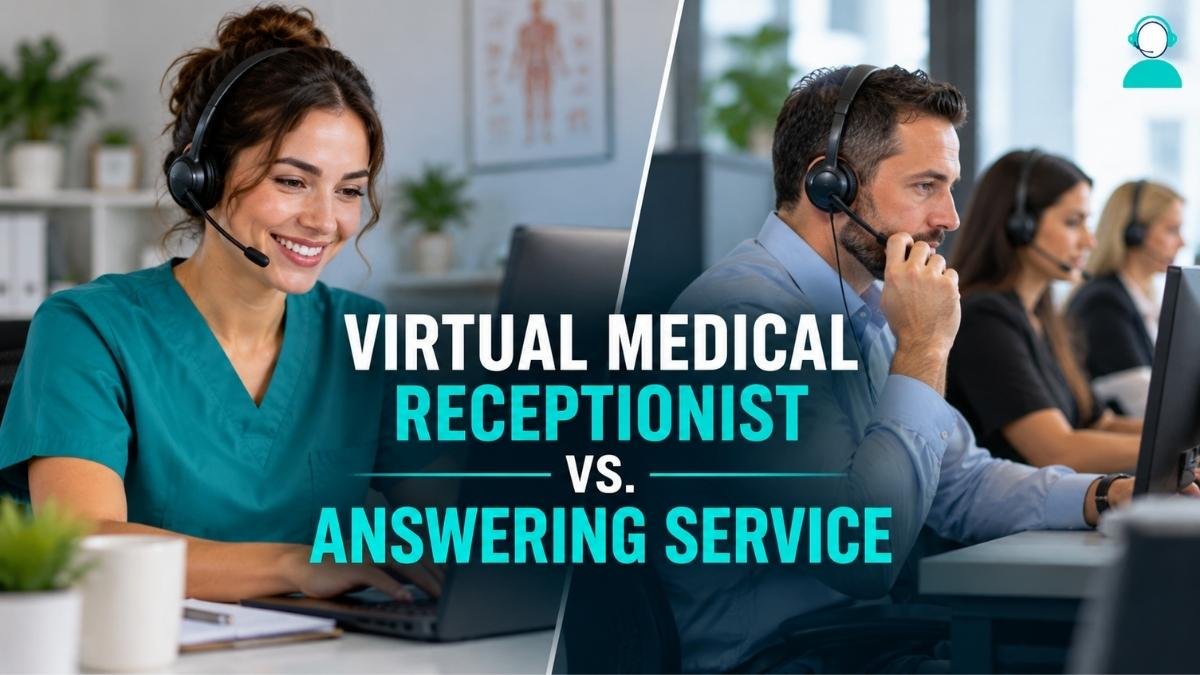
Front desk staffing shortages are forcing many medical, dental, and veterinary practices to rethink how phone calls get handled. When hiring cycles stall or turnover spikes, clinic leaders often compare a virtual medical receptionist vs. answering service.
Few have a clear framework for making that decision. Both options route calls away from an empty front desk, but they differ sharply in scope, oversight, and compliance responsibility.
A medical answering service typically logs messages and forwards them along to staff. A virtual receptionist manages scheduling, intake, and patient communication in real time, often inside the practice’s own systems.
Understanding these differences matters before signing a contract, since the wrong fit creates downstream problems in billing, documentation, and patient retention.
Virtual Medical Receptionist Vs. Answering Service

The two terms get used interchangeably, but they describe different levels of front desk responsibility. Knowing where each one starts and stops prevents mismatched expectations later. Here are the detailed differences between the two.
Core Call Handling Responsibilities
A medical answering service generally answers, screens, and records a message for callback. Staff follow a script and pass details to the office once it reopens.
A virtual medical receptionist takes on broader responsibilities, including resolving simple requests directly. That might mean confirming an appointment time or answering a billing question without escalation.
The scope of work reflects the training level behind each model. Practices comparing a virtual medical receptionist vs. answering service should start by listing which calls truly need same-call resolution.
Level of Patient Interaction and Personalization
Answering services rely on standardized scripts to keep calls short and consistent. This works well for basic message-taking but can feel impersonal to returning patients.
A virtual receptionist is a healthcare virtual assistant typically has access to patient history, allowing for more natural conversation and fewer repeated questions.
That familiarity can reduce repeat calls and callback volume over time. Personalization also affects patient engagement, since patients notice when staff recognize their situation and history.
Integration With EHR and Practice Management Software
EHR integration separates the two models most clearly. A virtual medical receptionist often works directly inside the practice’s scheduling and records system. This allows real-time appointment booking and accurate documentation of the call.
A traditional answering service usually operates outside the EHR, relying on manual message transfer. Manual handoffs introduce more room for transcription errors or delayed follow-up. Practices with complex intake requirements tend to benefit more from direct system access.
Appointment Scheduling Capabilities
Appointment scheduling is often the deciding factor for practices with high call volume. A virtual receptionist can view open slots and book directly, reducing back-and-forth.
An answering service typically records a scheduling request for staff to complete later. That delay can create a lag between patient intent and confirmed booking.
For practices already dealing with patient no-show rates, added scheduling delay compounds the problem. Real-time booking access is the clearer advantage here.
After-Hours and Overflow Call Handling
After-hours answering is a core function of both models, but coverage depth differs. Answering services excel at simple after-hours triage: taking a message, flagging urgency, or routing emergencies.
A virtual receptionist can extend that coverage into scheduling and basic intake during off-hours. Overflow handling during peak call times follows a similar pattern.
Practices with predictable, low-complexity after-hours needs may not require full receptionist-level coverage. Higher call complexity usually justifies the added capability.
Staffing Structure and Human Involvement
Some answering services rely heavily on an automated attendant with limited live agent involvement. Others use trained live agents for every call, similar to a live receptionist model. Virtual medical receptionists are almost always live staff working remotely. The staffing structure directly affects consistency and the caller’s experience.
Fully automated systems handle volume well but struggle with nuanced requests. Clinics should confirm how much human involvement is built into either option.
Typical Cost and Contract Structure
Pricing models vary by vendor rather than by category alone. Many answering services charge per call or per minute, which can suit lower call volumes. Virtual receptionist services more commonly use flat monthly pricing tied to volume tiers.
Contract length and cancellation terms also differ across vendors and deserve close review. Clinics should request a sample invoice before committing to any agreement. Comparing cost per resolved call gives a more accurate view of value.
Also Read: Medical Virtual Assistant Cost
HIPAA Compliance and Data Handling
Since a 2013 regulatory update, any vendor handling patient calls is treated as a HIPAA compliance business associate. Both answering services and virtual receptionists must sign a Business Associate Agreement and apply safeguards to patient privacy.
Encrypted messaging, access controls, and staff training apply regardless of vendor type. The difference lies in how much protected health information passes through the vendor’s systems. Deeper EHR access generally means a larger compliance footprint to verify.
| Compliance Note |
|---|
| A signed Business Associate Agreement is a baseline requirement for any vendor handling patient calls. It is not an optional add-on. |
How Virtual Medical Receptionists Support Appointment Scheduling And Patient Intake
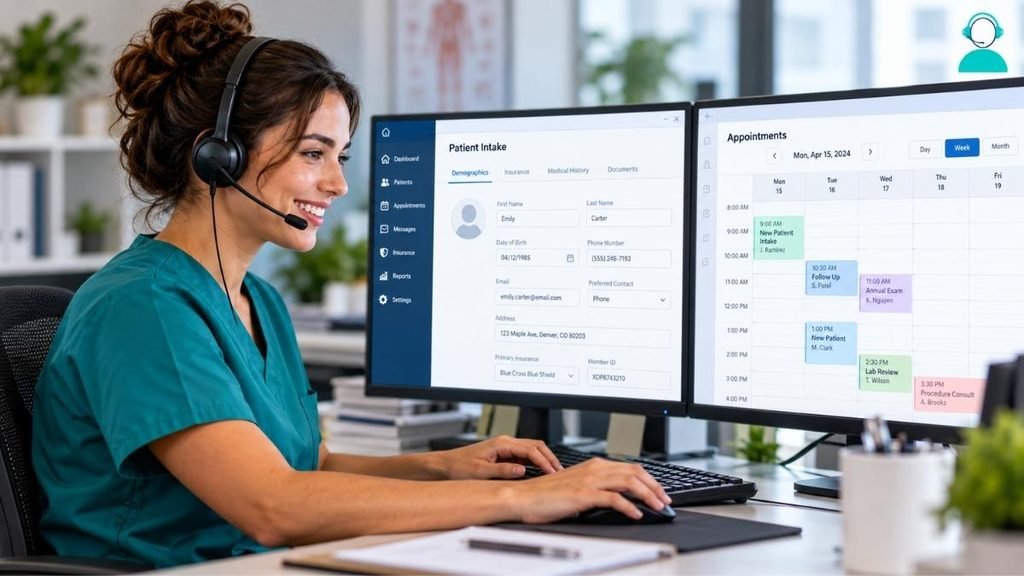
Scheduling accuracy and intake completeness directly affect downstream billing and follow-up quality. This section connects front-of-house call handling to the administrative work that happens after the call ends.
Accurate patient intake during the initial call reduces rework at check-in and claims submission. When a virtual receptionist collects insurance details and contact information correctly the first time, billing staff spend less time chasing missing fields.
MGMA Stat data has found that scheduling issues rank among the top concerns front office leaders cite. Average scheduling calls often run well over eight minutes. Reducing that friction lowers staff workload and shortens patient wait times.
| Common Mistake |
|---|
| Incomplete intake data during the initial call is a frequent cause of delayed claims. It also drives repeat patient outreach after the visit. |
HIPAA Compliance And Patient Privacy In Call Handling

Every vendor that touches patient information during a call carries compliance obligations, regardless of how the service is marketed. This section outlines what applies across both models.
HIPAA compliance requires administrative, physical, and technical safeguards for protected health information collected by phone.
That includes encrypted call recordings, restricted data access, and documented staff training. Since medical answering services and virtual receptionists are both classified as business associates, the same core rules apply to each.
Penalties for mishandled patient information can reach tens of thousands of dollars per violation. Vendor vetting is a compliance task, not a preference.
| HIPAA Tips |
|---|
| Ask any prospective vendor for their current Business Associate Agreement template before reviewing pricing or scheduling a demo. |
Workflow Efficiency – Where Each Option Fits Into Daily Practice Operations

Call handling connects directly to broader medical practice management workflows, including medical billing accuracy and provider scheduling. This section looks at where each model reduces friction versus where it adds a handoff step.
Inconsistent call handling tends to create a chain reaction across the practice. A missed scheduling detail can lead to a rescheduled appointment, which then affects same-day revenue. MGMA data has shown front office staff turnover reaching 40 percent in recent years.
That churn increases reliance on outside call handling support during transitions. Call handling quality during these gaps often determines whether patients stay with the practice.
Practices using medical office software with built-in call routing tend to see fewer handoff errors with the answering vendor.
Comparison Table – Virtual Medical Receptionist Vs. Medical Answering Service
The table below summarizes the operational differences covered above in a single reference view.
| Factor | Virtual Medical Receptionist | Medical Answering Service |
| Appointment scheduling | Real-time booking | Message taken for callback |
| EHR integration | Common | Limited or none |
| Patient intake depth | Detailed, structured | Basic contact and reason for call |
| After-hours coverage | Scheduling and triage | Message-taking and triage |
| Staffing model | Live remote staff | Live agents or automated attendant |
| Typical pricing | Flat monthly tiers | Per call or per minute |
| Best fit | Higher call volume, complex intake | Lower volume, basic message relay |
Deciding Which Option Fits Your Practice
The right choice depends on call volume, intake complexity, and existing software rather than practice size alone. This section outlines the factors worth reviewing before a decision.
Start with call volume and complexity. A practice fielding mostly simple scheduling requests may find a medical answering service sufficient and lower cost.
A practice managing frequent insurance questions or telehealth coordination usually needs the broader scope a virtual receptionist provides.
Existing healthcare technology, including EHR and practice management systems, should also factor into vendor selection, since integration reduces manual work. Reviewing three months of call logs before deciding gives a clearer basis than relying on assumptions.
Frequently Asked Questions (FAQs)
What is the main difference between a virtual receptionist and an answering service?
A virtual receptionist typically handles scheduling and intake directly, often with EHR access. An answering service usually takes messages for staff to follow up on later.
Can a medical answering service schedule appointments directly in an EHR?
Most answering services do not have direct EHR access and instead record a scheduling request for office staff to complete manually.
Is a virtual medical receptionist automatically HIPAA compliant?
No vendor is automatically compliant. Compliance depends on signed agreements, safeguards, and training that the practice should verify directly.
How do veterinary and dental practices use these services differently from medical clinics?
The core call handling functions are similar, though intake fields, scheduling systems, and after-hours emergency protocols vary by practice type.
Final Thoughts
A virtual medical receptionist and a medical answering service both handle patient calls. They differ in scheduling depth, EHR access, and how patient data is handled under HIPAA. Practices with high call volume or complex intake needs typically benefit more from a virtual receptionist.
Smaller practices needing basic after-hours coverage may find an answering service sufficient. Reviewing call volume, compliance requirements, and existing software before deciding helps avoid mismatched staffing choices later on.