Chronic care management programs require monthly contact with enrolled patients, and that requirement does not pause for staff shortages or billing deadlines.
Practice managers often ask how CCM virtual assistants help patient follow-up when in-house teams are already stretched thin.
The answer depends on which tasks are administrative versus clinical, and how those tasks are divided across a care team. CCM programs run on consistent, timed touchpoints tied directly to reimbursement rules.
A single missed touchpoint can affect billing eligibility and patient outcomes. This article looks at where healthcare virtual assistant support fits into that workflow, and where it does not.
What Do CCM Virtual Assistants Do For Patient Follow-Up?
CCM virtual assistants support patient follow-up by scheduling check-ins, updating care plans, logging remote monitoring data, and flagging gaps in chronic care management documentation for the clinical care team to review.
Why Patient Follow-Up Is Hard To Sustain In Chronic Care Management
CCM programs depend on monthly patient contact, care plan review, and accurate time logging tied to billing codes. Most clinics assign this work to already busy clinical staff, which creates gaps during high patient volume periods.
A missed monthly check-in is not just a documentation problem. It affects patient engagement, delays updates to the care plan, and can reduce the accuracy of time logged for medical billing.
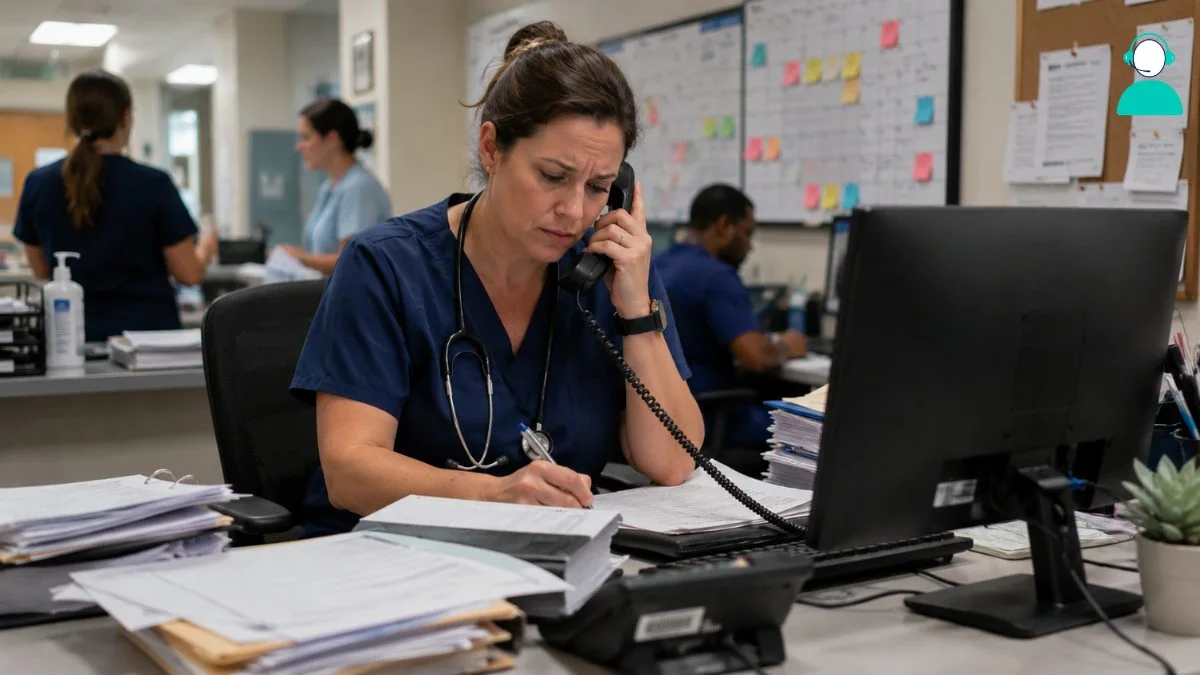
A single nurse or care coordinator managing dozens of CCM patients often cannot maintain consistent monthly contact alongside other clinical duties.
This creates a chronic care management staffing question rather than a technology question. Clinics need a way to sustain contact volume without pulling licensed staff away from direct patient care.
How CCM Virtual Assistants Help Patient Follow-Up

A virtual assistant for CCM takes on administrative and coordination tasks inside a chronic care management program. This lets licensed staff focus on clinical review. The following breakdown shows where that support applies.
1. Scheduling and Confirming Monthly Check-Ins
Patient follow-up scheduling is one of the most time-intensive parts of a CCM program. A virtual assistant can contact patients, confirm availability, and schedule the required monthly touchpoint.
This keeps the calendar filled without requiring a nurse to pause clinical work for outreach calls. Confirmed appointments also reduce no-show rates, since reminders go out consistently. The clinical team still conducts the actual check-in; the assistant manages the logistics around it.
2. Updating and Reviewing Care Plans
CCM care plan updates require accurate records of patient status between visits. A virtual assistant can prepare draft updates based on patient-reported information gathered during scheduling calls.
The care team reviews and approves any clinical changes before they are finalized. This division keeps documentation current without shifting clinical judgment away from licensed staff. It also reduces the backlog that builds when care plan updates wait for open appointment slots.
3. Logging Remote Patient Monitoring Data
Remote patient monitoring coordination often involves collecting device readings, sorting them by patient, and flagging values outside expected ranges. A CCM virtual assistant can manage this intake process daily, on a fixed schedule tied to each patient’s monitoring plan.
This does not replace clinical review. It ensures the data reaches the care team in an organized format, rather than arriving in scattered batches. Clinics using remote patient monitoring alongside CCM often see this task consume several hours weekly without dedicated support in place.
4. Coordinating Between Patients and the Care Team
Care coordination workflow tasks include relaying non-clinical questions, confirming medication refill status, and passing along patient concerns to the appropriate team member. A virtual assistant provides care team support by handling this routing directly.
This keeps communication moving without requiring a nurse to answer every incoming call. Patients get a faster response for non-clinical questions. The care team receives organized, prioritized information instead of an unsorted inbox.
5. Flagging Missed Or Overdue Follow-Ups
CCM billing rules require a minimum amount of documented contact time each month for every enrolled patient, as outlined by CMS. A virtual assistant can track which patients have not yet been reached and flag those cases before the billing cycle closes.
This reduces missed reimbursement opportunities tied to incomplete monthly contact. It also surfaces patients who may need additional outreach, which supports more consistent patient outcomes across the enrolled population over time.
6. Supporting Clinical Documentation For Time Tracking
Clinical documentation support for CCM includes logging call duration, contact type, and follow-up notes required for billing. Accurate time tracking is central to CCM reimbursement, since claims depend on documented minutes per patient per month.
A virtual assistant can maintain these logs consistently, which reduces the administrative load on clinical staff. This does not involve clinical documentation of diagnoses or treatment decisions, which remains the responsibility of licensed providers on the care team.
7. Assisting With Care Transitions and Referrals
When a CCM patient is referred to a specialist or transitions between care settings, follow-up communication has to happen quickly. A virtual assistant can confirm referral appointments and relay basic transition information to the receiving office.
This keeps the process moving without pulling a care coordinator away from other CCM patients. It supports care coordination across primary and specialty care without adding clinical decision-making to the assistant’s role in the process.
8. Communicating Non-Clinical Updates to Patients
Not every patient communication requires a clinical staff member to be involved. Appointment reminders, portal access help, and general program updates fall into this category of routine contact.
A virtual assistant can manage these touchpoints directly, keeping patients informed between scheduled check-ins. This supports patient engagement without adding to the call volume already handled by nurses or care coordinators each day.
You can also read our article on, benefits of chronic care management virtual assistant.
What Virtual Assistants Should Not Handle In CCM Follow-Up

Task delegation works only when the boundary between coordination and clinical judgment stays clear. Some parts of CCM follow-up cannot shift to non-clinical staff.
Clinical Decision-Making and Care Plan Changes
Any change to medication, treatment approach, or care plan direction requires review by a licensed provider. A virtual assistant can gather information and prepare updates, but final clinical decisions stay with the care team.
This distinction matters for both patient safety and regulatory compliance. Clinics that blur this line risk documentation errors that affect billing accuracy and patient care quality. The assistant’s role ends where clinical interpretation begins.
Diagnosis-Related Communication
Conversations involving diagnosis, symptom interpretation, or treatment explanation require a clinician. A virtual assistant should not field these questions directly, even when a patient raises them during a scheduling call.
Instead, the assistant flags the concern and routes it to the appropriate team member. This keeps communication accurate and protects the clinic from liability tied to unlicensed clinical advice.
Compliance and Documentation Considerations For CCM Virtual Assistants
Virtual assistant support inside a CCM program raises questions about data handling and reimbursement documentation. Both areas require specific safeguards before implementation begins.
HIPAA Compliance and Data Handling
Any virtual assistant working with patient information must operate under HIPAA-compliant systems and signed agreements. This includes secure access to scheduling platforms, encrypted communication channels, and a signed business associate agreement with the clinic.
Clinics should confirm these protections before sharing any patient data. HIPAA compliance is not optional for administrative roles that touch patient records, even when the work is limited to scheduling or logging.
Documentation For Reimbursement Support
CCM reimbursement requirements depend on accurate, time-stamped records of patient contact throughout each month. Virtual assistants who log this data need clear documentation standards aligned with current billing codes.
Errors in this documentation can affect claims tied to medical billing and population health reporting. Clinics should establish documentation templates and review processes before delegating this task, rather than adjusting them after issues appear in an audit.
Final Thoughts
CCM virtual assistants help patient follow-up by managing scheduling, documentation support, and non-clinical communication. Licensed staff retain responsibility for care plan decisions and clinical judgment.
This division allows chronic care management programs to maintain consistent monthly contact without expanding in-house staff. Clinics evaluating this option should map current follow-up tasks against what can be safely delegated.
The clearest results come from defining that boundary before implementation, not after gaps in documentation or compliance appear.