
Healthcare practices regularly face difficult staffing decisions. Open positions can leave front-office teams stretched, delay operational work, and place additional pressure on clinical staff. At the same time, patient demand rarely slows to match workforce availability.
Understanding how virtual assistants help clinics during staffing shortages has become increasingly important for practice managers and operations leaders.
Remote administrative support can help maintain workflow continuity when recruiting takes longer than expected or workloads increase unexpectedly. Before evaluating any staffing model, it helps to understand why shortages persist and how they affect daily clinic tasks.
Understanding Staffing Challenges In Modern Clinics
Staffing shortages affect nearly every part of clinic operations. Operational tasks continue to accumulate even when positions remain vacant, creating pressure on teams responsible for patient communication, billing support, intake processing, and follow-up activities.
The challenge extends beyond filling open roles. Many practices must balance growing patient demand, compliance requirements, and admin responsibilities with limited staffing resources.
As workloads expand, operational efficiency often becomes harder to maintain without additional support or process adjustments.
Why Staffing Shortages Continue Across Healthcare
Staffing shortages rarely result from a single issue. Most clinics face a combination of hiring delays, increasing workload demands, changing patient expectations, and workforce turnover.
Even when patient volumes remain stable, operational responsibilities continue to grow. As a result, many practices find themselves managing more work with fewer available staff members.
Several factors contribute to this ongoing challenge:
- Operational work often expands faster than clinical capacity
- Unfilled positions create operational costs beyond recruitment expenses
- Patient scheduling and wait times can become harder to manage
- Front desk teams often experience the greatest workload pressure
- Processing delays can develop when workload exceeds capacity
- Staff burnout becomes a growing operational concern
Here’s How Virtual Assistants Help Clinics During Staffing Shortages
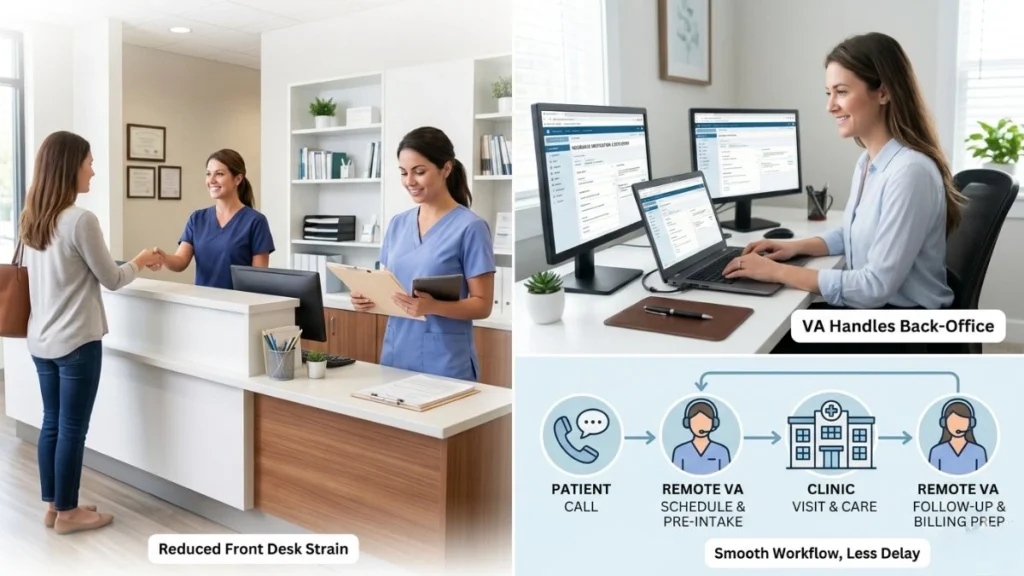
When workload increases and staffing levels remain limited, clinics often look for ways to maintain daily operations without disrupting patient care. This is where understanding how virtual assistants help clinics during staffing shortages becomes valuable.
Rather than replacing clinical staff, virtual assistants typically support routine back-office functions that keep workflows moving and reduce pressure on in-house teams.
1. Managing Appointment Scheduling
Appointment management requires consistent attention throughout the day. Cancellations, rescheduling requests, provider availability changes, and new patient bookings can quickly create additional work for front-office staff.
A healthcare virtual assistant can help maintain calendar accuracy, update appointments, process booking requests, and monitor availability. This support helps reduce bottlenecks while allowing on-site staff to focus on patients who are physically present in the clinic.
2. Handling Patient Calls and Messages
Patient communication remains one of the most time-consuming front-office responsibilities. Questions about appointments, office policies, forms, and follow-up instructions often generate a steady volume of calls and messages.
A medical virtual assistant can assist by responding to routine inquiries, routing requests to the appropriate department, and managing communication queues. This helps maintain timely responses while reducing interruptions for front-desk personnel and clinical staff.
3. Supporting Insurance Verification Processes
Insurance verification is essential before many patient visits. Coverage checks, eligibility confirmation, and benefit reviews all require attention before appointments can proceed efficiently.
Remote support can help complete these tasks before patient visits. By reviewing coverage details and confirming eligibility information, virtual assistants help reduce delays and improve workflow readiness prior to appointments.
4. Assisting With EHR Data Entry
Electronic Health Record (EHR) systems require accurate information to support clinical data and operational functions. Data entry responsibilities often include patient demographics, insurance details, and updates submitted through intake forms.
A remote medical assistant can help enter and organize approved information within established protocols. This allows clinical personnel to spend less time on routine updates while maintaining accurate system information.
5. Coordinating Patient Follow-Ups
Patient follow-up activities often compete with other daily priorities. Missed appointments, post-visit communication, and routine outreach can become difficult to manage when staffing levels are limited.
Virtual assistants can support these efforts by tracking follow-up requirements, contacting patients when appropriate, and maintaining communication logs. Consistent follow-ups help clinics maintain continuity without placing additional pressure on internal staff.
6. Helping With Medical Billing Preparation
Billing workflows depend on accurate information and timely processing. Before claims move forward, supporting tasks often require review and preparation.
Remote assistants can assist with billing-related tasks such as organizing claim information, reviewing submitted details, and preparing files for billing teams. This support helps reduce workload pressure while keeping revenue cycle activities moving efficiently.
7. Supporting Referral and Intake Workflows
Patient intake and referral management involve several structured steps. Information must be collected, reviewed, and routed appropriately before services can be delivered.
Virtual assistants can help gather required forms, verify submitted information, and track referral-related activities according to clinic procedures. This support helps maintain organized workflows while reducing delays during periods of limited staffing.
8. Maintaining Administrative Continuity
Staff absences, seasonal demand changes, and open positions can disrupt routine operations. Operational tasks continue regardless of staffing fluctuations, making continuity planning an important consideration.
Virtual assistants can provide ongoing support for routine responsibilities that must be completed each day. Their involvement helps clinics maintain consistency across key functions while internal teams focus on higher-priority patient-facing responsibilities.
Tasks Clinics Can Safely Delegate To Virtual Assistants
Delegation works best when clinics clearly separate operational responsibilities from clinical decision-making. Virtual medical assistants handle structured, non-clinical workflows that support daily operations without interfering with medical judgment.
This separation helps maintain compliance while reducing workload pressure on in-house teams managing patient care.
- Managing bookings and updating clinic calendars accurately
- Collecting and organizing new patient information before visits
- Verifying coverage and benefits before patient appointments
- Updating and organizing approved patient information in systems
- Preparing claim details for billing team review
- Monitoring referral status and maintaining internal records
- Sending reminders using approved clinic templates
- Compiling operational data for internal reporting needs
For a complete breakdown of the tasks, we’ve a detailed guide on tasks a medical virtual assistant can do.
Compliance and Security Considerations
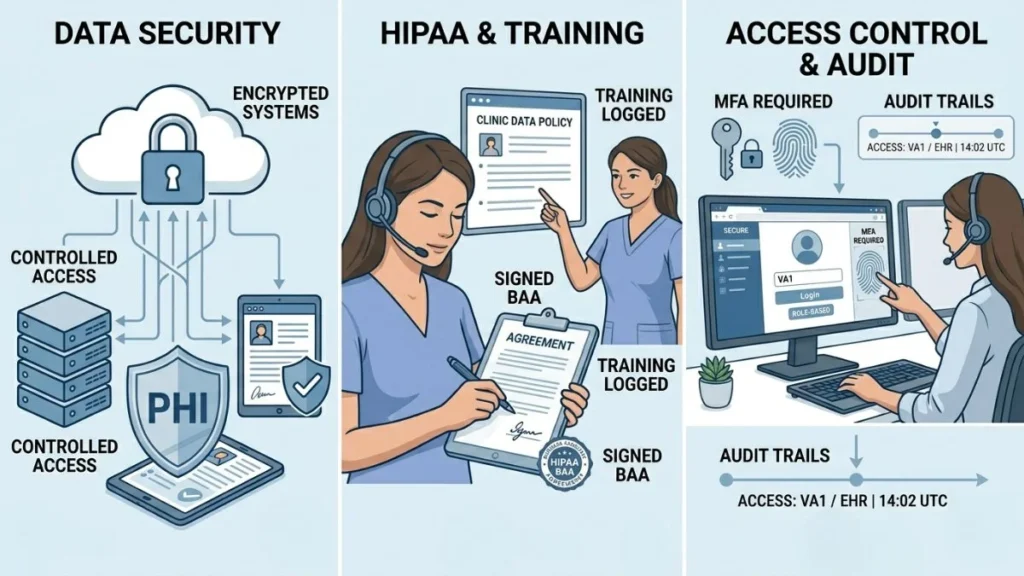
When clinics use external support, compliance becomes a core operational requirement. Patient data must be handled under strict privacy rules, especially HIPAA, with controlled access, secure systems, and clearly defined workflows.
- Understanding HIPAA Requirements
HIPAA defines how patient information must be protected in healthcare operations. Virtual assistants must follow the same privacy rules as internal staff, including limited access and secure handling of all patient-related information.
- Data Access Controls and Permissions
Access controls ensure virtual assistants only see required data for assigned tasks. Role-based permissions reduce exposure risks and allow clinics to quickly adjust or revoke access when responsibilities change.
- Secure Communication Processes
Secure communication prevents exposure of sensitive data through unsafe channels. Clinics use encrypted tools, approved emails, or EHR messaging systems, avoiding informal platforms for patient-related communication.
- Vendor Vetting and Training Expectations
Clinics evaluate virtual medical assistants for healthcare experience and compliance understanding before assigning tasks. Training focuses on workflows, privacy rules, and consistent handling of responsibilities across different clinic environments.
- Audit Trails and Accountability Measures
Audit trails track system access and changes to patient information. Combined with task logs and reviews, they ensure accountability and help clinics maintain compliance across all delegated workflows.
Steps for Integrating Virtual Medical Assistants Into Clinic Workflows
Integrating virtual assistants into clinic operations requires structured planning rather than ad-hoc task assignment. Clinics perform best when workflows are mapped clearly, responsibilities are defined, and communication channels are established from the beginning.
This approach helps ensure support fits into existing systems without disrupting clinical processes or compliance standards.
- Locate tasks slowing operations (intake delays or billing processing delays)
- Record step-by-step workflows for tasks currently handled in-house
- Assign non-clinical, repeatable tasks suitable for remote support
- Set secure and consistent methods for updates and coordination
- Limit system access based on role requirements and compliance needs
- Set clear standards, timelines, and accuracy requirements
- Track efficiency changes and identify areas needing adjustment
- Modify task distribution based on workload shifts and priorities
Final Thoughts
Staffing shortages can create operational pressure across medical, dental, and veterinary practices. Virtual assistants provide a structured way to support scheduling, documentation, billing preparation, and patient communication without changing clinical responsibilities.
Understanding how virtual medical assistants help clinics during staffing shortages allows leaders to evaluate workflow gaps more clearly, maintain operational continuity, and make informed decisions about resource allocation during periods of staffing instability.