Front desk bottlenecks in dental practices often emerge during peak patient hours. Staff must manage:
- appointment scheduling
- verify insurance eligibility
- respond to patient inquiries
- maintain documentation
These overlapping responsibilities create delays, increase error risk, and reduce overall workflow efficiency.
In many practices, this leads to a decision point: expand in-office staffing or redistribute administrative workload. A virtual dental assistant offers a structured alternative by handling defined non-clinical tasks remotely.
Understanding which responsibilities can be delegated, and how they integrate into existing systems, helps practices improve operational consistency without disrupting clinical workflows.
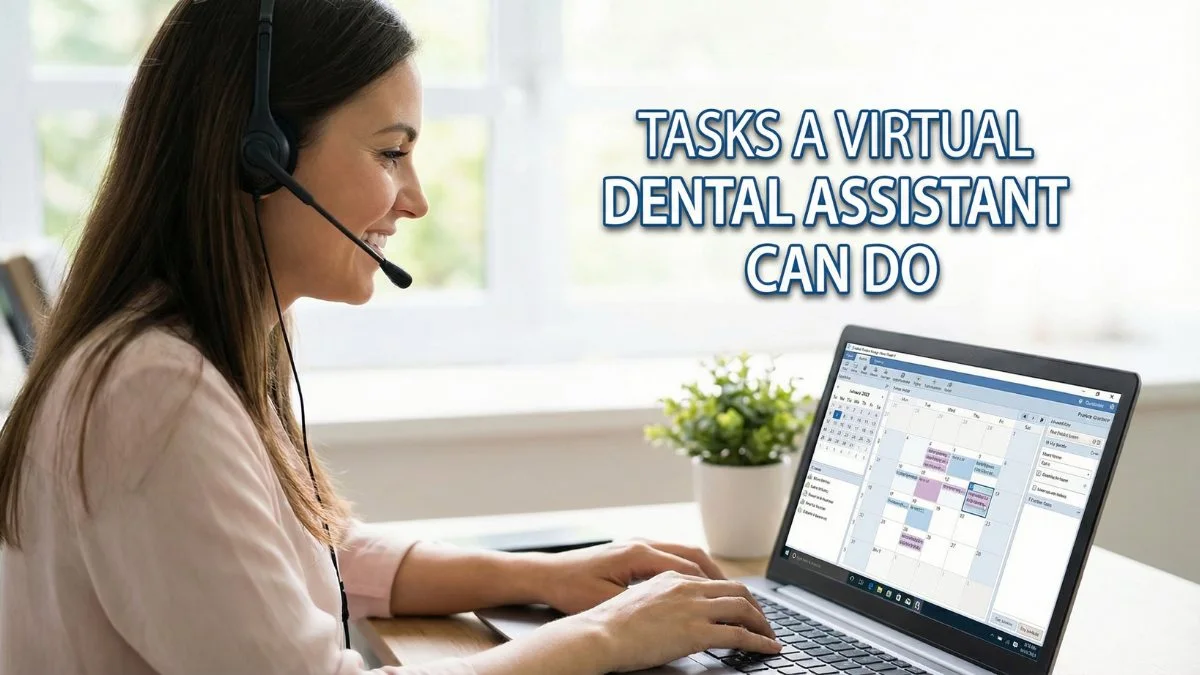
What Tasks A Virtual Dental Assistant Can Do?
A virtual dental assistant can handle non-clinical tasks such as appointment scheduling, insurance verification, billing support, patient follow-ups, documentation updates, and recall management.
These assistants work remotely through dental practice management systems and secure communication tools, helping dental offices maintain efficient administrative workflows without adding more in-house front desk staff.
What Does A Virtual Dental Assistant Do?

A virtual dental assistant supports administrative workflows remotely, focusing on continuity, accuracy, and task execution. In multi-provider or high-volume practices, this role often functions as an extension of the front desk rather than a replacement.
1. Appointment Scheduling and Calendar Management
How much time does scheduling actually consume daily? In many practices, it accounts for a significant portion of front desk workload, especially when handling reschedules and cancellations.
A virtual assistant can manage patient scheduling remotely using systems like Dentrix, Eaglesoft, or Open Dental. They coordinate confirmations, adjust provider schedules, and align appointment types with chair availability.
This reduces scheduling gaps and improves chair utilization. Practices often see fewer last-minute cancellations when reminders and confirmations are handled consistently.
2. Insurance Verification and Eligibility Checks
Insurance verification remains one of the most time-intensive administrative tasks. It requires confirming coverage, limitations, and frequency rules before patient visits.
A virtual assistant can handle dental insurance verification process workflows by contacting payers and reviewing plan details. They document benefits, including distinctions between PPO and HMO plans.
This reduces claim denials and improves billing accuracy. According to American Dental Association (ADA), practice management insights, incomplete verification is a common source of reimbursement delays.
3. Patient Communication and Follow-Ups
Patient communication affects both operational flow and patient retention. Delayed responses often lead to missed appointments or incomplete treatment plans.
A virtual assistant manages patient communication management across phone, email, and text platforms. They handle reminders, confirmations, and post-visit follow-ups.
This improves response consistency and reduces no-show rates. Practices maintain engagement without requiring constant front desk availability.
4. Dental Billing and Coding Assistance
Billing workflows require accuracy in coding and documentation. Even minor errors can result in claim rejections or delayed payments.
A virtual assistant can support dental billing workflows by preparing claims, verifying codes, and organizing attachments. They assist with dental billing and coding support, including CDT code validation.
This leads to cleaner claim submissions and faster reimbursement cycles. Administrative teams spend less time correcting errors and reprocessing claims.
5. Electronic Dental Records (EDR) Management
Accurate record-keeping is essential for both operations and compliance. Inconsistent data entries create inefficiencies and increase audit exposure.
A virtual assistant can assist with electronic dental records management within systems such as Dentrix Ascend or Eaglesoft. They update patient files, verify chart entries, and maintain structured clinical data.
Reliable records support continuity of care and regulatory alignment. Staff can access complete patient histories without delays or corrections.
6. Treatment Plan Coordination
Treatment plans often require multiple follow-ups before acceptance. Delays in communication can affect case conversion rates.
A virtual assistant supports treatment plan coordination by explaining next steps, scheduling appointments, and tracking patient responses.
This improves case acceptance consistency. Patients receive timely communication, which reduces drop-off between diagnosis and treatment.
7. Recall and Reactivation Systems
Recall systems play a critical role in patient retention. Many practices struggle to maintain consistent follow-up for overdue patients.
A virtual assistant can coordinate patient follow-ups and recalls using automated systems and manual outreach. They track recall lists and manage reactivation campaigns.
This supports preventive care schedules and stabilizes patient volume. Practices maintain continuity without assigning repetitive outreach to in-office staff.
Workflow Integration In A Dental Practice
Integrating virtual assistants requires alignment with existing operational systems. Clear processes ensure responsibilities are executed without duplication or gaps.
Defined structures allow remote support to function seamlessly alongside in-office roles. This improves coordination and maintains consistency across daily operations.
Coordination With In-Office Staff
How does a remote assistant stay aligned with on-site teams? Defined coordination protocols ensure clarity.
A virtual assistant integrates through shared dashboards, task tracking tools, and scheduled updates. They collaborate with front desk staff and providers using practice management platforms.
This creates alignment across roles. Staff can rely on consistent execution without requiring constant check-ins.
Daily Task Distribution and Oversight
Task allocation determines how efficiently responsibilities are handled. Without structure, duties can overlap or remain incomplete.
Managers assign defined responsibilities such as scheduling, verification, and data updates. Progress is tracked through measurable outputs like completed verifications or confirmed appointments.
This improves accountability and reduces operational variability. Practices gain predictable administrative performance.
Compliance and Data Handling Considerations
Delegating administrative tasks introduces compliance requirements. Patient data must be handled according to U.S. healthcare regulations.
HIPAA-Compliant Communication Practices
Patient information must remain secure across all communication channels. Remote access increases the need for controlled systems.
A virtual assistant uses HIPAA-compliant communication tools, including encrypted messaging platforms and secure login environments. Access is restricted based on role requirements.
This reduces compliance risk while maintaining operational flexibility. Practices can extend support without exposing sensitive data.
Documentation Accuracy and Audit Readiness
Accurate patient records support both billing processes and regulatory compliance. Missing or inconsistent entries increase audit risk and delay reimbursements.
A virtual assistant ensures records meet internal standards. They review entries, confirm completeness, and maintain organized patient data.
This supports audit readiness and reduces correction workload. Practices maintain consistency across all clinical and administrative records.
Operational Benefits and Limitations

A virtual assistant introduces measurable efficiency gains, but limitations must be clearly understood for effective implementation.
Efficiency Gains In Administrative Workflows
Administrative workload often limits front desk capacity. Delegation can improve throughput and reduce response delays.
A virtual assistant contributes to improved dental office administrative efficiency by handling repetitive responsibilities such as scheduling, verification, and data updates.
Practices often observe faster response times and fewer scheduling gaps. Staff can shift focus toward patient-facing and clinical priorities.
Tasks That Still Require In-Office Staff
Not all responsibilities can be delegated. Clinical tasks require physical presence and direct patient interaction.
Procedures, chairside assistance, and in-person consultations remain the responsibility of licensed staff. A virtual assistant supports administrative workflows but does not replace clinical roles.
This distinction ensures realistic expectations. Practices maintain operational balance between remote and in-office functions.
When Should A Dental Practice Use A Virtual Assistant?
Adoption depends on workload patterns, staffing constraints, and operational goals. Identifying the right timing improves implementation outcomes.
Indicators of Administrative Overload
Signs of overload include delayed patient responses, inconsistent scheduling, and incomplete documentation. These issues often signal capacity limitations.
A virtual assistant provides remote dental office support by stabilizing administrative workflows. They reduce backlog and improve response consistency.
This allows practices to maintain service quality without immediate hiring. Decision-makers gain flexibility in managing workload fluctuations.
Evaluating Cost vs. Operational Impact
Cost evaluation should include both direct expenses and operational improvements. Time savings and error reduction are key factors.
A virtual assistant supports outsourced dental administrative tasks, reducing reliance on additional in-office hires. This aligns with broader dental front desk outsourcing strategies.
Practices should assess impact on scheduling efficiency, claim accuracy, and staff workload. This provides a clearer basis for decision-making.
Also Read: How Dental Offices Use Virtual Administrative Assistants?
Final Thoughts
So, that’s all about the tasks a virtual dental assistant can do. They can manage a defined set of administrative and coordination tasks that directly impact workflow efficiency. These include scheduling, insurance verification, communication, and documentation.
Clear role boundaries and structured integration ensure consistent performance. Practices that evaluate operational needs and task distribution carefully can use virtual support to improve efficiency.