A typical Remote Patient Monitoring (RPM) program generates a steady flow of device readings, alerts, and follow-up tasks every day.
Someone has to log that data, check it against thresholds, and keep the patient’s chart current. For many clinics, that workload outpaces front-desk capacity within a few months of launching RPM.
This raises a practical question: how do virtual assistants support RPM programs without adding another full-time hire to your staff?
The short answer is that they take on the administrative and data-support layer, not the clinical judgment layer. That distinction matters for staffing decisions, billing accuracy, and compliance.
The sections below break down which tasks fit a virtual assistant’s role. They also outline where licensed staff must stay involved, and what that split means for daily operations.
What Is The Role of A Virtual Assistant In RPM Programs?
A virtual assistant in an RPM program handles administrative and data-support tasks, logging device readings, updating EHR records, flagging abnormal alerts, and coordinating patient follow-ups, so licensed clinical staff can focus on monitoring decisions and patient care.
How Do Virtual Assistants Support RPM Programs
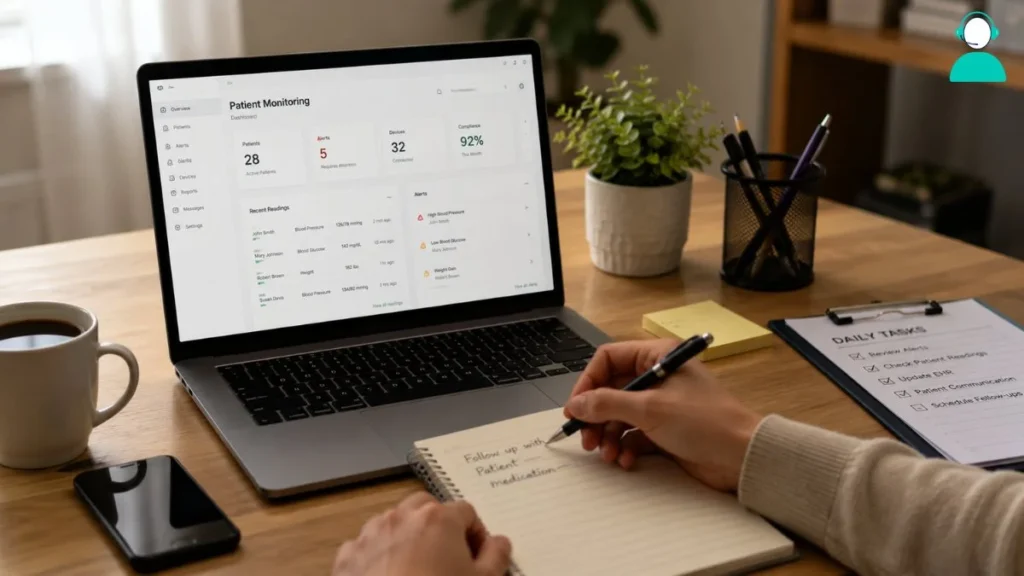
Most of the day-to-day work in an RPM program falls into a few repeatable categories. Virtual Medical Assistants (VMAs) for RPM cover most of them, supporting Patient Engagement and clinical workflows without touching diagnostic decisions.
Clinical Data Entry and Vitals Logging
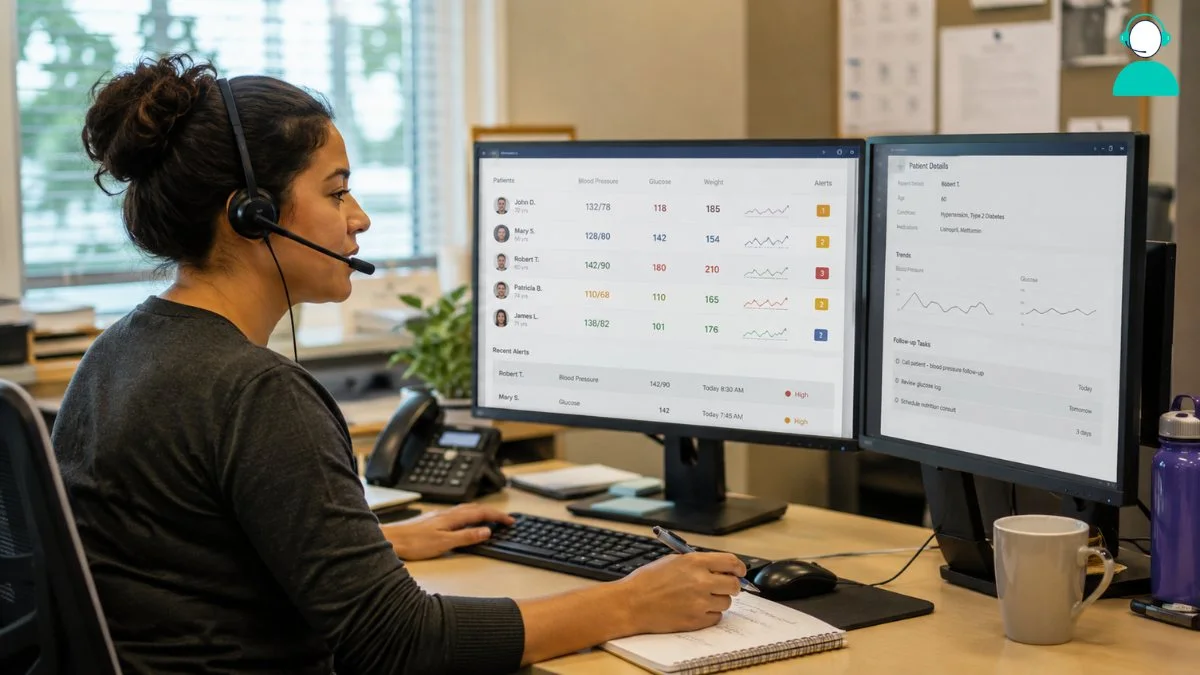
RPM devices transmit blood pressure, glucose, and weight readings on a set schedule. The virtual assistant’s job here is logging these readings into the EHR and flagging any gaps in transmission.
The patient record stays current between clinical reviews as a result. A missed reading is easy to overlook during a busy week. An early catch prevents a blind spot in the patient’s monitoring history.
The task is repetitive but precise, since accuracy matters more than speed. Consistent clinical data entry is what keeps the rest of the RPM workflow reliable.
EHR Integration and Chart Updates
RPM platforms and the practice’s EHR often run as separate systems. That transfer of readings, alerts, and notes between the two systems is the assistant’s job, so nothing sits unreviewed in a separate dashboard.
Chart updates also need to reflect the current care plan. The assistant adds vitals trends and confirms a provider has signed off before billing documentation closes for the period.
EHR integration support like this removes a manual step that otherwise falls on already-stretched clinical staff.
Also Read: How Virtual Assistants Improve Medical Record Accuracy?
Patient Triage and Alert Escalation
Alerts trigger whenever a reading crosses a set threshold built into the RPM device. Most alerts are routine, but a few need clinical attention right away.
Incoming alerts get checked against a protocol the clinic has already approved. Readings that fall within normal variation get logged and closed out.
Anything outside that range gets escalated to a nurse or physician immediately. Patient Triage in this context is about sorting and routing, not making a clinical call.
Medication Adherence Check-Ins
Adherence gaps are hard to catch from device data alone. A scheduled check-in call or portal message fills that gap between visits.
These calls confirm medication timing and capture any reported side effects or refill issues. The information goes straight to the care team. This is not a clinical assessment.
Medication adherence tracking simply gives the provider better information before the next decision gets made.
Care Coordination With Providers
Flagged readings and triage notes are only useful if they reach the right provider quickly. A virtual assistant routes that information and tracks whether a follow-up got scheduled.
When a referring physician needs an update, the assistant compiles recent RPM data into a short summary. This saves the provider a manual review step.
Care coordination handled this way keeps RPM data connected to actual clinical follow-through, rather than sitting in a dashboard no one revisits.
Billing and Coding Support For RPM
RPM reimbursement depends on tracking monitoring days and documenting them correctly. Missed documentation is one of the more common reasons claims get denied or delayed.
A virtual assistant tracks how many monitoring days a patient has logged each billing cycle. The assistant also flags incomplete windows before the claim goes out.
Billing and coding for RPM support like this does not replace a certified biller. It catches gaps early so the billing team has accurate numbers to work from.
Telehealth Platform Scheduling Support
Many RPM programs pair device monitoring with periodic telehealth visits. Those visits require coordination across a Telehealth Platform and the in-office calendar, which takes ongoing attention.
These visits need scheduling and reminders, which the assistant handles directly. The assistant also confirms patients show up with RPM device data ready to review.
A missed appointment breaks the monitoring cadence the program depends on. Fewer no-shows mean steadier data and fewer gaps for the clinical team to chase down later.
Which RPM Tasks Should Stay With Licensed Clinical Staff

A clear task boundary keeps delegation useful instead of risky for the practice. Clinics that define this line early avoid both staffing bottlenecks and compliance problems down the road.
Tasks Suited For Delegation
Several RPM tasks fit the role of a virtual medical assistant very well because they follow a defined process. Data entry, scheduling, and reminder calls all fall into this category.
Documentation prep for billing also belongs here, since it follows a set format the practice already uses. Routine portal messages, like appointment confirmations, fit the same pattern.
None of these tasks require a clinical license. They require attention to detail and a clear protocol to follow.
Tasks That Require Licensed Oversight
Some tasks cannot move to a virtual assistant, regardless of how routine they look on paper. Clinical interpretation of vitals or RPM trends is one of them.
Medication changes and diagnosis-related decisions also stay with the provider. So does sign-off on emergency escalation, even when the assistant flagged the alert first.
The boundary is not about distrust in the support role. It reflects where licensure and liability actually sit under state and federal rules.
How VAs Support HIPAA Compliance In RPM Workflows
Outside support in an RPM workflow raises an obvious question about data access. HIPAA-compliant virtual assistants operate under specific controls, not open access to every record.
Data Security and Access Controls
A virtual assistant should only see the records tied directly to assigned tasks. Role-based access inside the EHR and Patient Portal makes that possible without granting full chart visibility.
Communication between the assistant and the clinic also needs to run through a secure, encrypted channel. Email and standard text messaging do not meet that bar.
These controls are standard for any HIPAA-compliant vendor relationship and are not unique to RPM monitoring specifically.
Documentation For Audit Readiness
Compliance reviews go faster when a clinic can show exactly who accessed or entered data, and when. RPM workflows with outside support need this trail by default, not as an afterthought.
A log should exist for every entry, update, and message tied to RPM tasks. A compliance officer needs to find it quickly.
That history is far harder to piece together after the fact. The habit protects the clinic, not just the assistant performing the task.
What Impact Do VAs Have On RPM Outcomes and Reimbursement?
Task delegation only matters operationally if it changes something measurable for the practice. Three areas show the clearest connection: documentation accuracy, staff workload, and program reimbursement.
- Consistent data capture supports Value-Based Care reporting, since payers want monitoring records that are complete, not just timely.
- One of the clearer effects involves reducing Physician Burnout with VMAs, since administrative relief frees up clinical time previously spent on manual RPM upkeep.
- Accurate documentation supports Medicare RPM Reimbursement claims, since missing monitoring days are a common reason claims get reduced.
- Steadier monitoring cadence improves the completeness of Health Outcomes data the care team relies on for treatment decisions.
How To Add Virtual Assistant Support To An Existing RPM Program
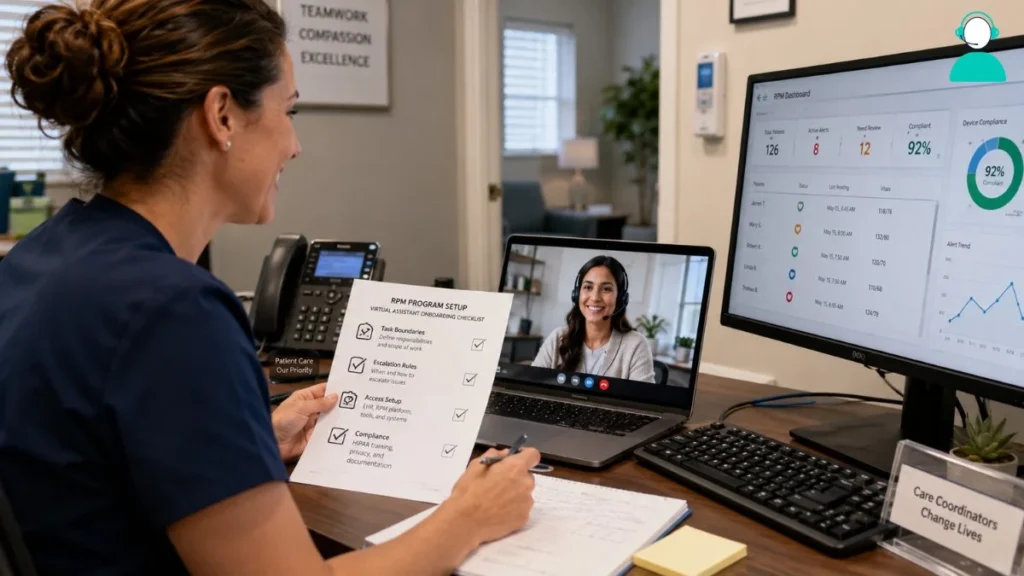
A virtual assistant addition to an existing RPM program works best as a defined rollout, not an open-ended handoff. A short, structured process reduces both risk and rework.
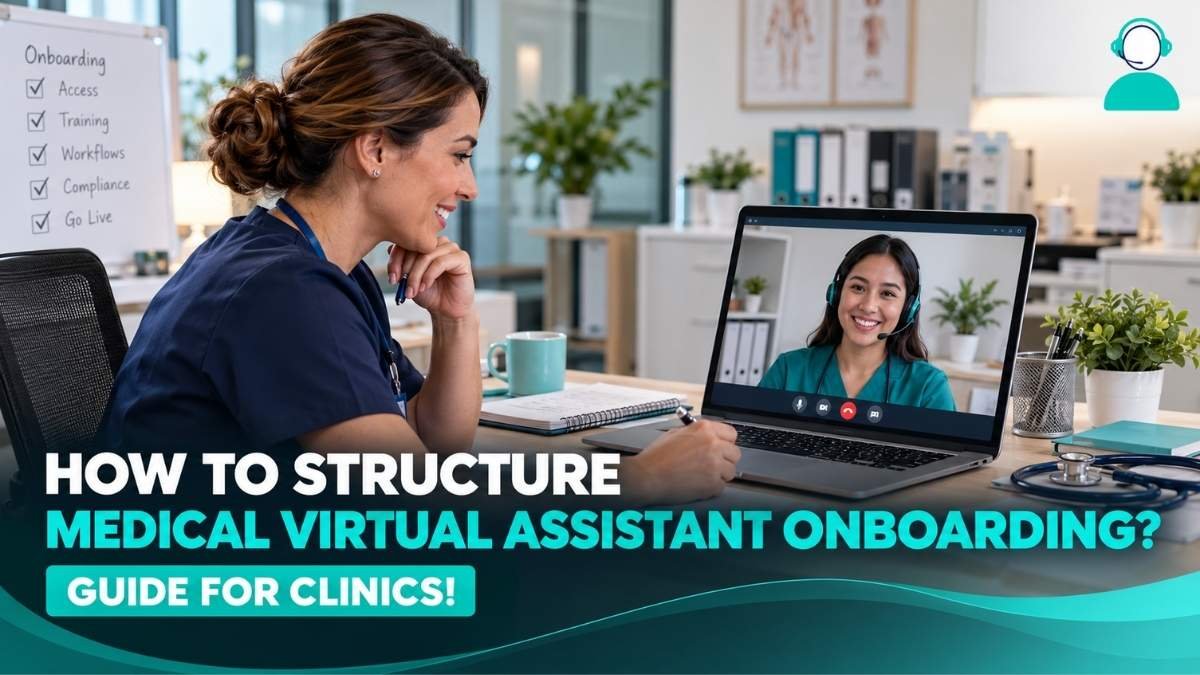
Define Task Boundaries Before Onboarding
Before any access gets granted, the clinic should write down exactly which RPM tasks the assistant will handle. The resulting list becomes the reference point for training and for any later disagreement about scope.
Escalation rules belong in this same document. A clear rule for routing alerts to a nurse removes guesswork during the first few weeks. Care Coordination runs more smoothly when this boundary exists in writing rather than as an informal understanding.
Confirm Access and Compliance Requirements
Patient data access should not start until the vendor agreement includes a signed Business Associate Agreement. That requirement protects the clinic under Healthcare Compliance (HIPAA) obligations.
EHR and patient portal access should then get configured to match the task list already defined, nothing broader.
Most platforms support role-based permissions for exactly this purpose. A shortcut here, taken to save onboarding time, creates risk that is expensive to unwind later.
Final Thoughts
Virtual assistants give clinics a practical way to manage RPM administrative work. That work includes data entry, EHR updates, patient check-ins, and billing documentation. The role works best when task boundaries stay clear and licensed staff retain clinical decision-making.
For practices evaluating healthcare virtual assistant staffing options, the question is not whether to delegate everything. It is which specific RPM tasks can move to a virtual assistant safely and consistently.
That boundary determines whether RPM monitoring stays accurate, billable, and sustainable.