Dermatology practices deal with a volume and variety of administrative work that most outpatient clinics do not.
On any given day, front desk staff are handling medical appointment intake, cosmetic consultation requests, insurance eligibility checks, prior authorization follow-ups, and patient callbacks, often at the same time. Hiring additional in-house staff addresses headcount, but not necessarily the task backlog.
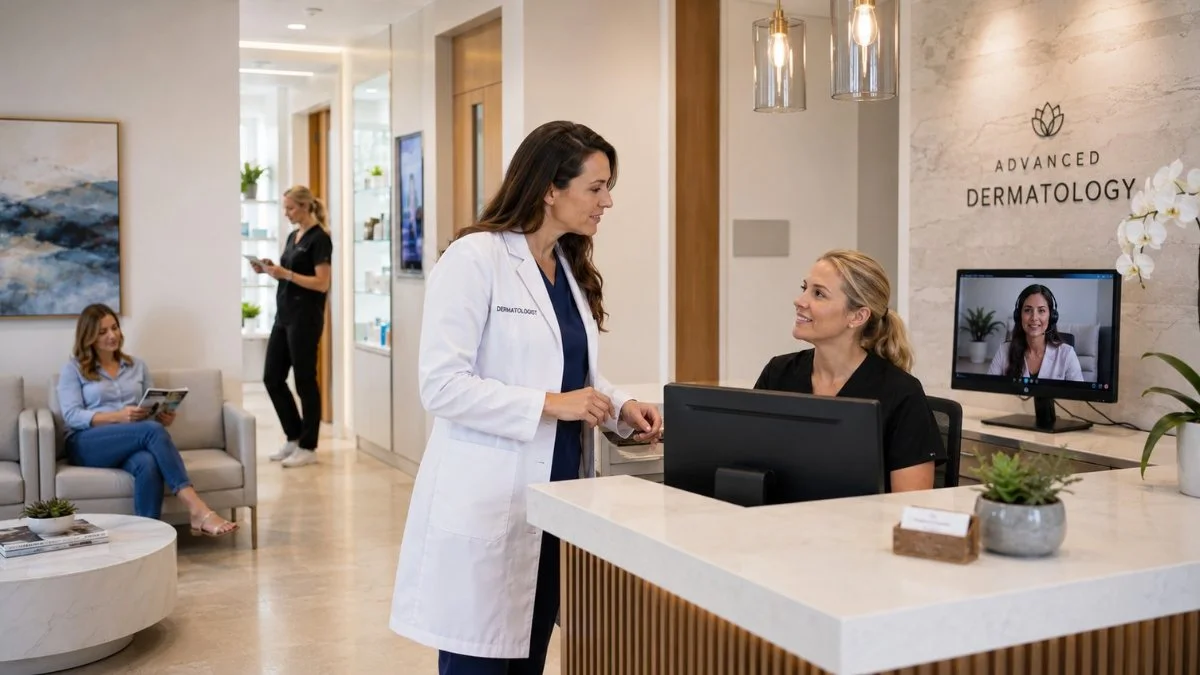
This is where understanding how dermatology practices use virtual assistants becomes operationally relevant. A remote medical administrative assistant can take on defined, repeatable tasks without adding to your physical office footprint or fixed payroll costs.
This article breaks down which tasks transfer well, how the setup works, and what to confirm before bringing a VA into your workflows.
How Dermatology Practices Use Virtual Assistants?
Dermatology practices use virtual assistants to handle non-clinical tasks remotely. These include appointment scheduling, insurance verification, billing support, and patient follow-up, so in-house staff can focus on direct patient care.
VAs work within existing EHR and practice management systems under defined access permissions. All arrangements require a signed Business Associate Agreement to meet HIPAA requirements.
Why Dermatology Practices Face Heavier Admin Loads
Most outpatient practices manage one patient track. Dermatology practices manage two: medical and cosmetic. Each carries its own scheduling logic, billing codes, insurance rules, and documentation requirements.
According to the CDC’s National Ambulatory Medical Care Survey, an estimated 37 million visits are made to office-based dermatologists in the U.S. annually. That volume means front-desk staff are rarely working on one task at a time.
Prior authorization adds another layer. Denial rates for dermatology biologics, used to treat conditions like psoriasis and atopic dermatitis, exceed 30%. Each denial requires follow-up, documentation, and often resubmission, work that falls on whoever is available, which is rarely the right person for it.
The combination of dual service tracks, high volume, and authorization-heavy workflows makes dermatology a practical candidate for structured task delegation.
Administrative Tasks Dermatology Practices Delegate To Virtual Assistants
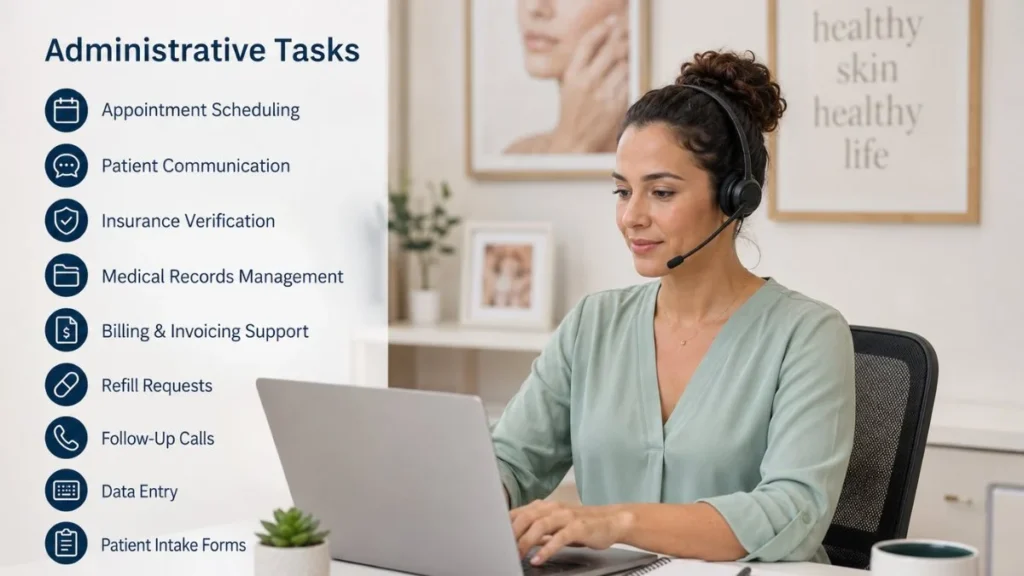
Healthcare virtual assistants handle non-clinical, process-driven tasks. The key word is “process-driven.” These are tasks with defined inputs, clear steps, and consistent outputs, not tasks that require clinical judgment or real-time in-office presence.
Appointment Scheduling and Calendar Management
A virtual assistant for dermatology clinic operations can manage the full scheduling queue: inbound requests by phone and portal, multi-provider calendar coordination, and distinguishing appointment types, medical vs. cosmetic, that often require different time blocks and intake steps.
Cancellation management is where scheduling support adds measurable value. Filling same-day cancellations requires fast, repeated outreach to a waitlist.
That is a repeatable task a virtual assistant can own completely, which helps reduce no-shows in dermatology practice without requiring a staff member to stop other work.
Insurance Verification and Prior Authorization
Before each patient visit, insurance eligibility should be confirmed. In busy clinics, this step gets skipped or rushed, leading to claim issues after the appointment. A VA can run verification checks in advance, flagging discrepancies before they create billing problems.
Prior authorization support for dermatology is a higher-effort task. Assistants can submit authorization requests, track status, follow up on pending cases, and relay updates to the clinic, all without clinical input. The boundary between administrative follow-up and clinical decision-making stays intact.
Patient Intake and Pre-Visit Communication
Incomplete intake at check-in slows clinical flow. A remote VA can send intake forms before the appointment, confirm that demographic and insurance data are current, and answer standard pre-visit questions through the patient portal or by phone.
Flagging incomplete intake before the patient arrives gives the clinic time to address gaps, rather than resolving them at the front desk mid-check-in.
EHR Documentation and Scribe Support
A virtual medical scribe for dermatology enters visit notes, procedure codes, and treatment plans into the EHR based on provider direction. The provider reviews and approves all documentation. The assistant does not generate clinical content independently.
Beyond visit notes, Virtual assistants support EHR documentation remotely by updating records after follow-up calls, logging referral communications, and maintaining chart organization. Accurate, timely documentation reduces audit risk and keeps the record current for next-visit reference.
Medical Billing and Claims Follow-Up
A medical billing virtual assistant handles claim submission, status tracking, rejection review, and payer follow-up. Coding errors and claim rejections are common in dermatology because of the mix of procedure types and the frequency of cosmetic services with different billing requirements.
A VA in the billing queue can flag recurring coding issues and follow up on unpaid claims, tasks that get deferred when in-house staff are managing patient-facing work simultaneously.
Patient Follow-Up and Care Coordination Communication
Post-visit follow-up is one of the most consistently deferred tasks in outpatient practices. A virtual medical assistant can manage the callback queue, send treatment adherence messages, route refill requests to the appropriate clinical contact, and relay lab result notifications per provider direction.
This is communication management, not clinical coordination: making sure the right messages reach the right people at the right time, with escalation protocols in place for anything requiring provider attention.
Also Read: Tasks A Medical Virtual Assistant Can Do
How Virtual Assistants Fit Into Existing Dermatology Clinic Systems
A remote staff member added to an existing clinical environment raises a fair question: how does this actually work day-to-day? The answer depends on three things, platform access, communication structure, and compliance setup.
EHR and Practice Management Platform Compatibility
Most healthcare virtual assistants are trained on the platforms dermatology practices already use: Modernizing Medicine (EMA), Nextech, Kareo, AdvancedMD, and similar systems. Access is set up through secure, permission-based credentials, not shared logins.
A VA handling scheduling does not need billing access. One supporting billing does not need full chart access. Defining access boundaries before onboarding is a compliance step, not an afterthought.
Communication Channels and Daily Handoffs
VAs typically operate during hours that align with clinic hours, though some arrangements extend coverage for patient communication tasks. The key is a clear handoff structure: end-of-day task summaries, priority flags for in-house review, and defined escalation paths.
In-house staff need to know what the virtual assistant completed, what is pending, and what requires direct attention, without having to ask.
HIPAA Compliance Requirements For Remote Staff
Any remote staff member who handles protected health information (PHI) must be covered under a Business Associate Agreement (BAA). This is a legal requirement, not an optional formality.
A HIPAA-compliant virtual assistant in healthcare should also be operating on a secure connection, using encrypted communication tools, and working within a documented compliance framework.
Before finalizing any VA arrangement, practices should confirm that the VA provider conducts HIPAA training, documents it, and can provide verification.
Also Read: How Medical Virtual Assistants Support Specialty Practices?
What Dermatology Clinics Should Evaluate Before Hiring A VA?
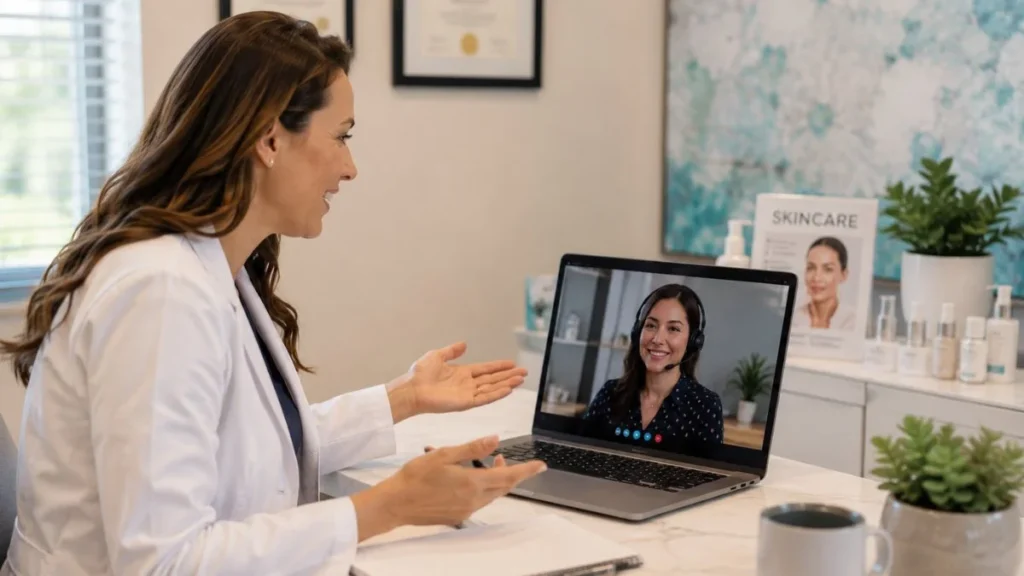
The decision to bring in a remote assistant is an operational one. The questions that matter are about process readiness, not just task volume.
Identifying Which Tasks Are Ready to Delegate
A task is ready to delegate when it has a clear starting point, a defined process, and a measurable output. Insurance verification meets that standard. Prior authorization follow-up meets it. A task like “managing the front desk” does not.
The strongest starting point is one workflow that currently consumes staff time, follows a consistent process, and does not require in-person presence. Healthcare administrative outsourcing works best when the clinic has already documented what it wants delegated.
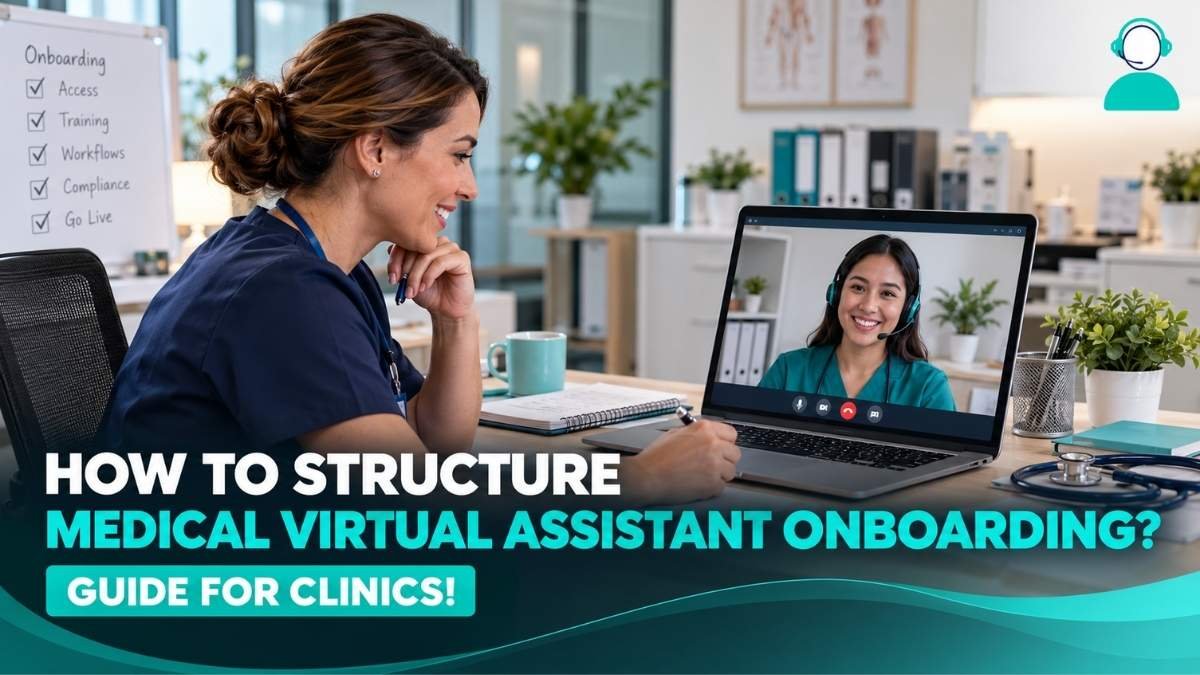
Defining Scope, Access, and Accountability
Before a VA starts, define which systems they will access, at what permission level, and what they are accountable for completing each day. Turnaround time expectations should be explicit, not assumed.
The first 60–90 days are the most important review window. Output quality and task completion rate should be assessed on a defined schedule, not to micromanage, but to catch process gaps before they become habits.
In-House Vs. Remote Staffing Cost Comparison
In-house administrative staff in the U.S. typically cost $20–$30 per hour, excluding benefits and overhead. Remote VA arrangements vary depending on training level and model, dedicated vs. shared support.
The virtual assistant vs. in-house comparison is not hourly rate alone. Task completion rate, error rate, and time-to-resolution per workflow matter more. A lower rate with inconsistent output is not a cost saving; a higher rate with reliable execution often is.
Mistakes Dermatology Practices Make When Using Virtual Assistants
Most VA arrangements that underperform share the same root causes.
Delegating without written SOPs is the most common issue. Without a documented process, a VA will build one from inference, and it may not match how the practice actually works.
Granting broad EHR access without role definition creates compliance risk and confusion. Access should match task scope, not be a blanket administrative login.
Skipping BAA documentation is a legal exposure. Every remote assistant handling PHI needs a signed agreement, regardless of how informal the arrangement feels.
Expecting immediate full productivity is unrealistic. Most practices see consistent output within 60–90 days of structured onboarding.
Hiring a general VA for healthcare-specific tasks creates skill gaps that matter. Billing code awareness, clinical terminology, and EHR platform use are not generic administrative skills.
Final Thoughts
Dermatology practices carry a complex administrative load, dual service tracks, high authorization volume, and documentation demands that run concurrently with patient-facing work.
Virtual assistants address specific, delegable tasks within that structure. They work best when the clinic defines the scope clearly, confirms compliance requirements upfront, and allows time for the working model to stabilize.
- Define task scope and system access before onboarding begins
- Confirm HIPAA compliance and BAA documentation are in place
- Start with one workflow and expand based on demonstrated output quality
- Review performance in the first 60–90 days against measurable task benchmarks
A VA does not replace in-house judgment. It handles the process work that currently competes with it.