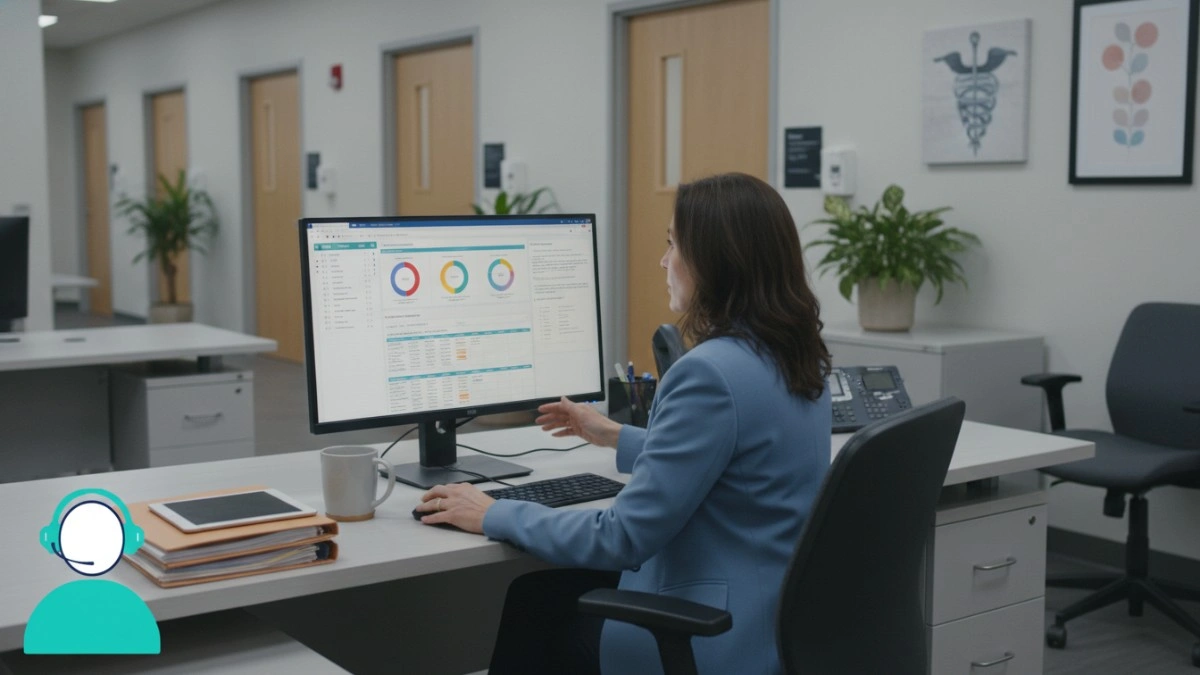

What Are the Advantages of Virtual Medical Assistant In Healthcare?
The advantages of virtual medical assistants in healthcare include reduced administrative workload, improved operational efficiency, cost savings, and scalable staffing support.
They assist with scheduling, billing, documentation, and patient communication while helping clinics maintain structured workflows. When implemented properly, virtual assistants also support HIPAA compliance and data security without the need to expand in-house staff.
Healthcare administrators are under constant pressure to maintain staffing levels while controlling overhead and meeting compliance standards. Front desk teams manage scheduling, billing questions, insurance verification, and documentation backlogs at the same time.
Hiring additional in-house staff increases payroll costs and workspace demands. Leaving positions unfilled slows workflows and delays revenue collection.
This environment raises a practical question: what are the advantages of virtual medical assistant in healthcare when measured against operational realities? The answer depends on task delegation, compliance safeguards, and workflow design.
This article examines how virtual medical assistants function inside clinical operations and where they provide measurable administrative support without expanding internal headcount.
Core Operational Advantages In Clinical Settings

Operational benefits must be evaluated in daily workflow terms, not general promises. Remote administrative support affects staffing ratios, claim submission timing, documentation flow, and communication response rates.
The following advantages reflect how clinics typically integrate remote assistance into existing systems.
1. Reduced Administrative Burden
Administrative overload often accumulates at the front desk and billing department. Phone calls, portal messages, appointment changes, and insurance checks compete for attention. Backlogs develop quickly during peak hours or staff absences.
A healthcare virtual assistant can assume defined non-clinical tasks such as appointment updates, eligibility checks, and data entry. This redistribution reduces repetitive work for in-house employees.
Clinical staff regain time for patient-facing responsibilities. The result is a measurable reduction in reduced administrative burden across daily operations.
2. Cost Reduction and Reduced Overhead Costs
Staff expansion increases fixed expenses. Salary, payroll taxes, benefits, workspace, and equipment must be budgeted before productivity gains occur. In smaller practices, one additional hire can shift the cost structure significantly.
Virtual support is structured differently. Service-based pricing typically avoids benefits and facility expenses. This creates direct cost reduction and contributes to reduced overhead costs.
Clinics maintain predictable administrative coverage without long-term employment commitments. For many practices, this model stabilizes staffing expenses while preserving flexibility.
3. Improved Efficiency in Daily Workflows
Workflow delays often begin with small administrative interruptions. Claims sit unprocessed. Patient calls remain unanswered. Charts wait for updates before provider review. These delays affect both patient experience and revenue timing.
Remote medical administrative support addresses time-sensitive tasks in parallel with in-house staff. Appointment scheduling support and claim preparation move forward without waiting for front desk availability.
This leads to improved efficiency in routine operations. Response times shorten, and daily task completion rates increase without adding physical staff.
4. Scalability During Volume Changes
Patient volume fluctuates throughout the year. Flu season, specialty referral spikes, and provider schedule changes alter workload quickly. Internal staffing cannot always adjust at the same pace.
A virtual medical assistant allows controlled scalability. Additional hours or expanded task lists can be introduced during peak periods. Support can contract when volume stabilizes.
This approach reduces the need for temporary hires or overtime costs. Clinics maintain continuity without restructuring their workforce.
5. 24/7 Availability For Administrative Coverage
Administrative tasks often extend beyond standard office hours. Insurance verification queues accumulate overnight. Portal messages arrive after closing time. Missed calls increase during lunch breaks or shift transitions.
Structured remote coverage can provide 24/7 availability for defined administrative functions. After-hours appointment scheduling and message triage continue without requiring in-house overtime.
Clinics start each business day with fewer unresolved tasks. This continuity reduces morning congestion and improves workflow balance.
6. Support for Revenue Cycle Management
Revenue cycle pressure is persistent in most practices. Delayed insurance verification, incomplete documentation, and claim errors extend payment timelines. Billing departments frequently operate under staffing strain.
A virtual assistant can assist with medical billing, claim status checks, and insurance verification services under defined protocols. Earlier eligibility confirmation reduces denied claims. Timely follow-ups prevent aging accounts.
This contributes to increased revenue stability by shortening reimbursement cycles and reducing preventable errors.
7. Enhanced Patient Care Via Admin Support
Administrative delays influence patient perception. Long hold times and slow follow-ups undermine operational credibility. Staff fatigue can affect communication tone and responsiveness.
Delegating routine administrative tasks strengthens patient communication consistency. Faster appointment confirmations and reminder coordination improve visit adherence. Clinical staff remain focused on care delivery rather than paperwork.
Over time, this indirect administrative support contributes to enhanced patient care without altering clinical staffing models.
8. Support for Advanced RPM Workflows
Remote patient monitoring programs generate continuous data and follow-up needs. Documentation, appointment coordination, and reporting must occur reliably. Internal teams often lack dedicated administrative capacity for this oversight.
A remote patient monitoring virtual assistant helps with coordination tasks, including data entry and scheduling follow-ups. Structured Electronic Health Records (EHR) management ensures reports are logged accurately.
Clear role boundaries prevent clinical decision overlap. This administrative support strengthens program continuity without expanding in-house administrative roles.
Tasks Appropriate For Delegation To A Virtual Medical Assistant

Delegation decisions should be precise. Not every responsibility can move outside the clinic. Clear task definitions protect compliance and workflow stability. The following categories reflect administrative functions commonly assigned to virtual medical assistants.
Front Desk and Scheduling Tasks
Front desk volume drives much of a clinic’s daily strain. Appointment changes, reminder calls, and intake coordination require consistent attention. Delays affect provider schedules and room utilization.
Virtual assistants frequently handle appointment scheduling updates, confirmation calls, and reminder messaging under defined scripts.
Calendar management and referral coordination can also be delegated. This reduces call congestion during peak hours. In-house staff maintain oversight while administrative traffic becomes more manageable.
Billing and Insurance Tasks
Billing accuracy depends on timely eligibility verification and documentation review. Administrative supervisors often face claim backlogs due to staffing shortages or competing priorities.
Virtual assistants can perform insurance verification, prepare billing documentation, and monitor claim submission status within approved systems. Defined escalation protocols ensure complex cases remain internal.
This division of labor supports steady revenue cycle movement while maintaining operational control over financial processes.
Documentation and EHR Management
Documentation delays interrupt provider workflow. Charts may remain incomplete before visits or lag after encounters. This affects compliance reporting and billing accuracy.
Virtual assistants trained in Electronic Health Records (EHR) management can update demographic data, upload scanned documents, and prepare chart templates. Strict access controls protect data security and align with HIPAA compliance requirements.
Clear boundaries prevent clinical entries from being delegated. Administrative documentation becomes more consistent without compromising regulatory standards.
Patient Communication Management
Patient portals and email communication require structured oversight. Unanswered messages increase call volume and frustration. Staff interruptions reduce concentration during in-person interactions.
Virtual assistants can triage non-clinical inquiries, send appointment reminders, and coordinate follow-up instructions. Escalation rules direct clinical questions to licensed staff.
This approach supports organized patient communication while preserving provider time. Administrative messaging remains timely without increasing on-site staffing levels.
We also had written a detailed article about the tasks a medical virtual assistant can do, read it as well.
Compliance, HIPAA, and Data Security Considerations
Compliance determines whether remote staffing is operationally viable. Administrative delegation does not reduce regulatory responsibility. Clinic leadership remains accountable for protected health information, documentation accuracy, and workflow oversight.
HIPAA Compliance Requirements
Remote administrative support must meet HIPAA compliance standards without exception. The first safeguard is a signed Business Associate Agreement. A BAA clarifies responsibility for protecting protected health information and defines breach notification obligations.
Secure communication channels are equally important. Encrypted email platforms, secure portals, and restricted system access prevent unauthorized disclosure.
Documentation policies should define what tasks can be performed and how records are stored. Clear written protocols reduce ambiguity and support consistent compliance enforcement.
Data Security Protocols
Administrative access should be limited to the minimum information required to perform assigned tasks. Encrypted systems protect patient data during transmission and storage. This safeguard is essential for maintaining data security standards across remote environments.
Access controls determine who can view, edit, or download information within EHR systems. Role-based permissions prevent unnecessary exposure of clinical details.
Audit trails record user activity, creating traceable documentation of system interactions. These controls mirror internal IT safeguards and should not be relaxed for remote personnel.
Risk Management and Oversight
Virtual staffing introduces operational flexibility but does not eliminate risk. Oversight remains a leadership responsibility. Defined task scopes ensure assistants handle administrative functions only. Clear boundaries prevent unintended involvement in clinical decision-making.
Internal SOP documentation should outline workflows, escalation procedures, and compliance expectations. Regular performance monitoring supports accountability.
Supervisors should review task completion accuracy and response times. Structured oversight reinforces that virtual staffing operates within the same governance framework as in-house staff.
Comparing In-House Staff Vs. Virtual Medical Assistants

Staffing decisions should reflect workload patterns, financial constraints, and workflow design. The comparison between in-house employees and remote administrative support is not about replacement. It is about operational alignment and resource allocation.
Cost Structure Differences
In-house staff require salary commitments, payroll taxes, benefits, and workspace investment. Equipment, onboarding time, and ongoing training increase total employment cost. These expenses remain fixed regardless of short-term volume changes.
Virtual staffing typically follows service-based pricing. Costs are tied to defined hours or task volume. This reduces long-term financial commitment and limits overhead exposure.
The difference lies in cost structure, not necessarily total expense. Each model carries financial implications that must be evaluated against workload consistency.
Flexibility and Scalability
Hiring in-house staff involves recruitment timelines, interviews, credential checks, and onboarding. Adjusting staffing levels later can be complex and disruptive. Volume spikes may outpace hiring capacity.
Virtual support often allows faster onboarding for administrative tasks. Hours can increase or decrease based on patient demand.
This provides controlled scalability without restructuring payroll. Flexibility becomes particularly relevant in seasonal specialties or practices with fluctuating referral volume.
Workflow Integration
Administrative continuity depends on system integration. In-house staff operate within established EHR access and communication channels from day one. Supervision occurs physically within the clinic environment.
Virtual assistants must integrate into existing systems through secure access protocols. Communication channels should be clearly defined, whether through secure messaging platforms or scheduled reporting.
A structured supervision model ensures task alignment with clinic workflows. Integration success depends on preparation and defined expectations.
Operational Control
Control over administrative processes remains a priority for clinic leadership. Defined workflows determine who performs each task and how outcomes are measured. In-house teams benefit from direct physical oversight.
Virtual staffing requires intentional reporting structures. Regular updates, task logs, and performance metrics maintain transparency. Quality monitoring should evaluate accuracy, turnaround time, and compliance adherence.
Neither model eliminates the need for supervision. Operational control depends on clarity of roles, documentation, and accountability systems.
If want want to hire a VA for your clinic, read the things to do before hiring a medical virtual assistant.
Implementation Considerations For Clinics
Operational success depends less on the decision to outsource and more on how the model is introduced. Virtual administrative support should follow a structured implementation plan. Clinics that define scope, oversight, and metrics early experience fewer workflow disruptions.
Identifying Workflow Gaps
Every clinic has pressure points. The question is where delays occur and why. Appointment backlogs, incomplete charts, or aging insurance claims often signal administrative overload rather than staffing failure.
Leadership should review which tasks consume most staff time during a typical week. Repetitive processes such as eligibility checks, reminder calls, and data entry frequently surface.
These patterns indicate opportunities for delegation. Clear identification of workflow gaps prevents shifting disorganized tasks to a remote team without structure.
Defining Clear SOPs
Standard operating procedures provide structure for remote support. Task documentation should outline step-by-step instructions, system navigation guidance, and expected turnaround times. Written clarity reduces variability and protects compliance.
Access levels must reflect role-based responsibilities. Administrative permissions should be limited to assigned functions within the EHR and billing systems.
Escalation procedures should specify when issues return to in-house staff. Clear SOPs ensure accountability and minimize ambiguity across teams.
Measuring Performance
Operational improvement must be measurable. Leadership should define performance benchmarks before delegating tasks. Turnaround time for appointment confirmations and eligibility checks provides one metric.
Claim submission accuracy offers another. Reduced error rates and fewer resubmissions indicate effective delegation. Scheduling completion rate can also be tracked to measure workflow stability.
Performance metrics allow supervisors to assess whether remote administrative support improves consistency rather than adding complexity.
Maintaining Communication
Administrative continuity depends on structured communication. Daily task tracking clarifies what was completed and what requires follow-up. Shared reporting tools provide visibility into workload distribution.
An assigned supervisor should oversee coordination between in-house staff and virtual assistants.
Regular check-ins address questions and refine processes. Communication systems reinforce operational alignment and prevent fragmentation of responsibility.
Final Thoughts
Virtual medical assistants can support clinics by reducing administrative burden, supporting improved efficiency, and enabling scalable staffing flexibility. Their impact depends on precise task delegation, defined workflows, and consistent compliance oversight.
For practice managers and clinic owners, the decision centers on operational alignment rather than staff replacement.
A structured review of workflow bottlenecks and cost structure clarifies whether remote administrative support strengthens stability without increasing fixed overhead commitments.