
What Tasks Can A Medical Virtual Assistant Do?
A medical virtual assistant can handle non-clinical administrative tasks such as appointment scheduling, patient intake, insurance verification, billing support, EHR updates, and routine patient communication under clinic supervision.
Clinic leaders often face the same operational decision as practices grow. Admin work increases, while adding in-house staff raises costs, space requirements, and supervision demands.
Front desks become overloaded, billing backlogs grow, and providers spend more time on non-clinical tasks. The issue is usually not whether support is needed, but what type of support fits safely into existing workflows.
Medical virtual assistants are now part of that conversation. Clinics must understand which tasks can be delegated and where clear limits apply.
This article explains the tasks a medical virtual assistant can do, from an operational perspective, based on how U.S. clinics function day to day.
What Is A Medical Virtual Assistant In U.S. Clinic Context?
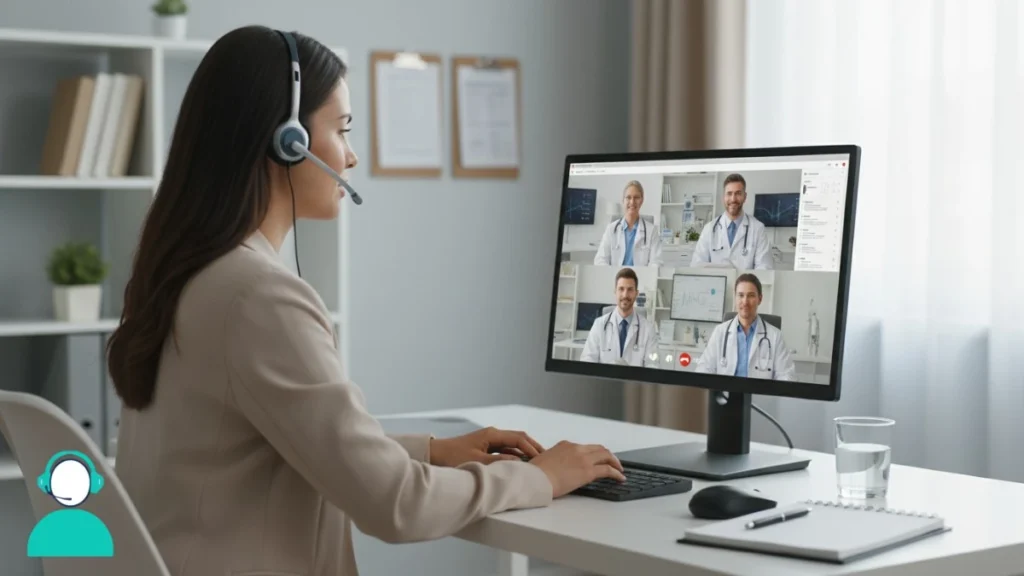
A medical virtual assistant is a remote administrative professional who supports healthcare practices with non-clinical tasks. The role exists to reduce operational load without changing care delivery or clinical authority.
In U.S. clinics, virtual medical assistants typically report to a practice manager, operations lead, or billing supervisor. Access, responsibilities, and oversight are structured around HIPAA requirements and internal protocols.
Unlike clinical medical assistants, virtual assistants do not provide patient care or make medical decisions. Their value depends on how well their tasks align with established workflows, documentation standards, and accountability structures in place.
Tasks A Medical Virtual Assistant Can Do For Clinics
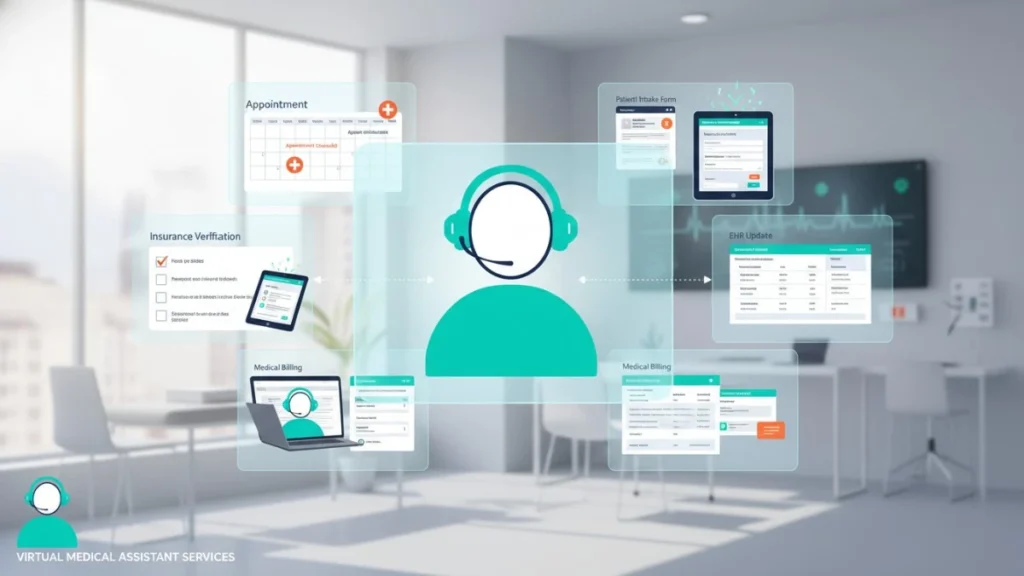
Administrative delegation only works when tasks are clearly defined and consistently supervised. This section outlines the most common medical virtual assistant tasks that clinics assign successfully across specialties.
1. Appointment Scheduling and Calendar Management
Scheduling is often the first function delegated because it follows defined rules. Virtual medical assistants can answer calls, schedule appointments, manage cancellations, and update provider calendars. Clear scheduling protocols reduce errors.
How does this work operationally? The assistant follows clinic-approved scripts and scheduling rules within the practice management system. Escalation paths remain with in-house staff.
This approach protects provider availability while reducing front-desk congestion. Clinics that document visit types and buffer times tend to see smoother outcomes with remote scheduling support.
2. Patient Intake and Demographic Data Entry
Patient intake involves structured data entry rather than judgment-based decisions. Virtual assistants can enter demographics, update contact details, and upload intake forms into the EHR/EMR. Accuracy depends on standardized intake templates.
Where do limits apply? Assistants do not interpret clinical information or validate symptoms. Their responsibility ends at data completeness and correct placement within the record. Clear naming conventions and data fields reduce rework.
Clinics often pair this task with front-desk review to maintain data quality and compliance standards.
3. Insurance Verification and Eligibility Checks
Insurance verification is time-consuming but process-driven. Virtual medical assistants can verify coverage, confirm eligibility, and document benefits prior to visits. This supports billing accuracy and reduces appointment-day surprises.
What controls are required? Access is limited to payer portals and verification tools. Documentation standards must specify where eligibility notes are stored. Final financial discussions typically remain with in-house staff.
When done correctly, verification support improves visit readiness and supports revenue cycle efficiency without expanding internal teams.
4. Medical Billing Support and Claim Follow-Ups
Billing teams often delegate structured follow-up tasks rather than full claim ownership. Virtual or remote assistants can submit claims under supervision, check claim status, and follow up on unpaid balances using predefined workflows.
What stays in-house? Coding decisions, adjustments, and payer negotiations remain with credentialed staff. Virtual support works best for repetitive steps that follow clear rules.
Clinics that document denial categories and response templates see better continuity. This division helps billing teams focus on higher-complexity work without sacrificing visibility or compliance.
5. EHR Documentation and Chart Preparation
Documentation support focuses on preparation rather than interpretation. Virtual assistants can update charts with demographic changes, upload external records, and prepare visit summaries for provider review. This reduces pre-visit administrative load.
Where are the boundaries? Assistants do not enter clinical assessments or diagnoses. Templates and checklists guide their work. Providers retain final review responsibility.
This structure protects record integrity while improving visit flow, particularly in high-volume outpatient settings where chart readiness affects daily schedules.
6. Referral Coordination and Record Requests
Referral workflows involve tracking, communication, and documentation. Virtual assistants can send referrals, follow up with external offices, and request medical records. These tasks require consistency rather than clinical judgment.
How is accountability maintained? Each referral step is logged within the system. Escalation rules define when in-house staff intervene. Clinics benefit when referral status updates are visible to providers.
This support reduces delays that often occur when referrals compete with front-desk priorities during peak hours.
7. Communication and Non-Clinical Follow-Ups
Routine patient communication is another common delegation area. Virtual medical assistants can respond to portal messages, send reminders, and conduct non-clinical follow-ups using approved scripts.
What safeguards are needed? Message categories must be clearly defined. Clinical questions are routed to licensed staff. Documentation of all interactions remains mandatory.
When protocols are followed, communication support improves response times without exposing clinics to scope-of-practice risks or inconsistent messaging.
Tasks Typically Not Appropriate For Medical Virtual Assistants
Delegation decisions should start with understanding limits. Virtual assistants should not perform tasks involving clinical judgment, diagnosis, or treatment decisions. This includes triage, medication changes, and patient counseling.
Why does this matter operationally? Scope violations create compliance and liability risks. State regulations and payer rules expect licensed staff involvement for clinical decisions.
Clinics protect themselves by documenting task boundaries and reinforcing escalation rules. Clear separation between administrative support and clinical authority maintains workflow integrity and regulatory compliance.
How Medical Virtual Assistant Tasks Fit Into Existing Workflows
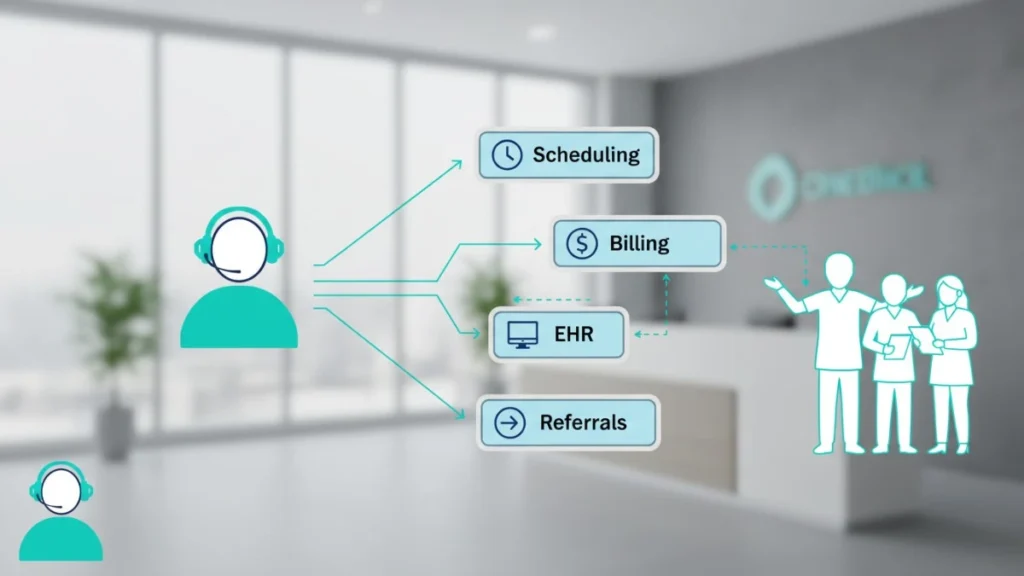
Successful integration depends on workflow design rather than staffing volume. Virtual assistants should complement, not replace, internal roles.
Front Desk and Administrative Integration
Front desks manage constant interruptions. Virtual assistants absorb structured tasks such as scheduling and data entry. Clear handoff points prevent duplication. Daily task lists and shared dashboards improve coordination.
Who owns the work? In-house staff retain accountability, while remote assistants execute assigned steps.
This structure maintains service quality and avoids confusion. Clinics that document ownership roles experience smoother collaboration and fewer operational gaps.
Billing and Revenue Cycle Support
Billing workflows benefit from delegation when roles are clearly segmented. Virtual assistants handle repetitive follow-ups, while billing specialists manage exceptions and payer communication.
What improves efficiency? Standard operating procedures and shared tracking tools. Visibility into claim status prevents redundant work.
This model supports virtual medical assistant services without compromising billing oversight. Clinics maintain control while expanding operational capacity.
Provider and Clinical Team Support
Providers often feel an administrative burden indirectly. Virtual assistants reduce chart prep delays and referral follow-ups, which improves visit flow.
How does this affect clinicians? Less time spent resolving administrative issues. Clear documentation standards prevent confusion.
Clinical teams remain focused on care delivery. Administrative efficiency improves without altering provider workflows or increasing clinical risk exposure.
Compliance and Oversight Considerations
Remote work does not reduce compliance responsibility. HIPAA requirements apply regardless of location. Virtual medical assistants require role-based access, secure systems, and documented training.
What oversight is essential? Audit trails, regular reviews, and clear reporting lines. Clinics should document which tasks assistants perform and who supervises them.
Compliance failures usually result from unclear expectations rather than technology gaps. Structured oversight protects patient data and supports sustainable remote staffing models.
Also Read: Things To Do Before Hiring A Medical Virtual Assistant
Evaluating Whether These Tasks Should Be Delegated
Delegation decisions should follow operational analysis, not staffing trends. Clinics benefit when administrative volume outpaces internal capacity or when turnover disrupts workflows.
What signals readiness? Consistent task backlogs, overtime patterns, and delayed follow-ups. Delegation works best when tasks are documented, repeatable, and low-risk.
Some clinics still require in-house staff due to complexity or patient volume. The goal is alignment, not replacement, within the broader clinic workflow efficiency strategy.
Final Thoughts
Medical virtual assistants can support a wide range of non-clinical tasks when roles, limits, and oversight are clearly defined. Scheduling, intake, verification, billing support, documentation prep, and routine communication are common examples.
The operational benefit comes from thoughtful delegation, not broad task transfer. Clinic leaders should evaluate workflows, compliance requirements, and supervision capacity before assigning responsibilities.
A practical takeaway is simple: delegate structured administrative work, retain clinical authority, and document everything. This approach supports sustainable staffing decisions without disrupting care delivery.